Samarkand
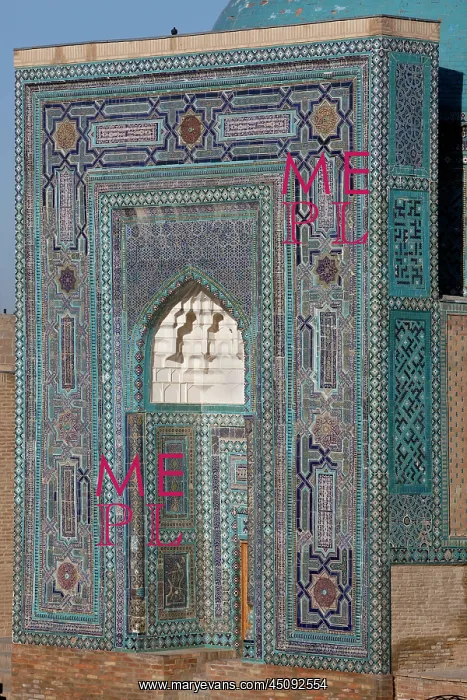
Detail of portal of Mausoleum of the middle group, (Nameless 1 Mausoleum), 1380s, Shah-I Zindah ensemble, and in the distance the blue cupola of the Bibi-Khanym Madrasah and mausoleum, Samarkand, Uzbekistan, pictured on July 19, 2010, at dawn. The Shah-i-Zinda Complex is a necropolis of mausoleums whose legendary origin dates back to 676 when Kussam-ibn-Abbas arrived to convert the locals to Islam. So successful was he that he was assassinated whilst at prayer. His grave remains the centre of the sacred site which grew over many centuries, especially the 14th and 15th, into an architecturally stunning example of ceramic art. The Mausoleum of the middle group.(Nameless 1 Mausoleum) was created by Usto Alim Nesefi, and is decorated with relief painted majolica. The portal decorations are notable for the symbol of octagonal stars. Samarkand, a city on the Silk Road, founded as Afrosiab in the 7th century BC, is a meeting point for the world's cultures. Its most important development was in the Timurid period, 14th to 15th centuries. Picture by Manuel Cohen
Pick your License
Restrictions Only for Ireland and United Kingdom and United States Of America
Archway Ensemble Gateway Mausoleum Nameless Necropolis Samarkand Shah-i Shah-i-zinda Tile Tiled Tiles Turkic Uzbek Uzbekistan Zinda
Features In These Collections
> Contributors > COH