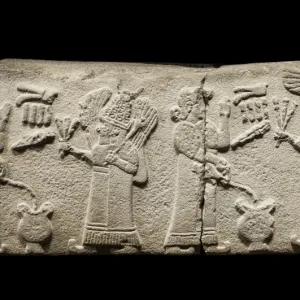

Sema-tawy relief, Pylon, Luxor Temple, Luxor, Egypt
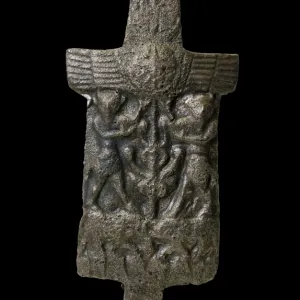
Sema-tawy relief, with gods of the river Nile linked by lotus and papyrus plants and a human trachea, symbolising unification of Upper and Lower Egypt, beside the statue of queen Nefertari and the colossal seated Ka statue of the king as the royal Ka, at the Pylon of Ramesses II, entrance to the temple, built c. 1260 BC, 19th dynasty, at the Luxor Temple, built c. 1392 BC, under Amenhotep III, 18th dynasty, New Kingdom, and Tutankhamun, Horemheb and Ramesses II, at Thebes, Luxor, Egypt. The pylon was originally covered with plaster and precious metals, carved and painted with scenes of the Battle of Kadesh. Thebes is listed as a UNESCO World Heritage Site. Picture by Manuel Cohen
Picture No
13724409
Media ID
45396976
Size
5906px x 5007px
(14.4MB)
Credit
Manuel Cohen / Mary Evans
Source
Photograph by Manuel Cohen
Date
2009