Khiva
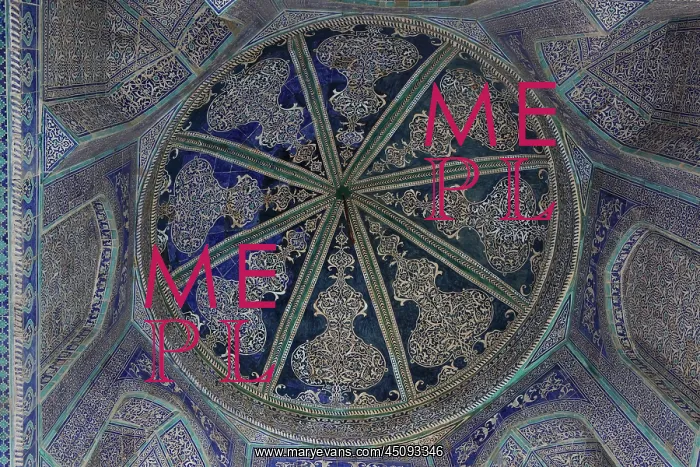
View from below of interior of dome, Pahlavan Mahmud Mausoleum, Khiva, Uzbekistan, pictured on July 6, 2010, in the afternoon. The mausoleum centres on the two-cupola shrine of Pahlavan Mahmud, Khiva's patron saint (said to have been a poet, soldier, furrier, wrestler and healer of diseases), and is also the burial complex of the Qungrat Khans. 19th and 20th century remodeling extended the complex adding tombs, an iwan and summer mosque, Quran reading halls, a Madrasah, and three small chambers, the middle one accommodating a prayer hall entered from the shrine's central hall. The interior of the mausoleum is richly decorated with traditional woodcarving, ceramics and metalwork, including majolica tiles commissioned in 1825 by Allah Quli Khan. Khiva, ancient and remote, is the most intact Silk Road city. Ichan Kala, its old town, was the first site in Uzbekistan to become a World Heritage Site(1991). Picture by Manuel Cohen