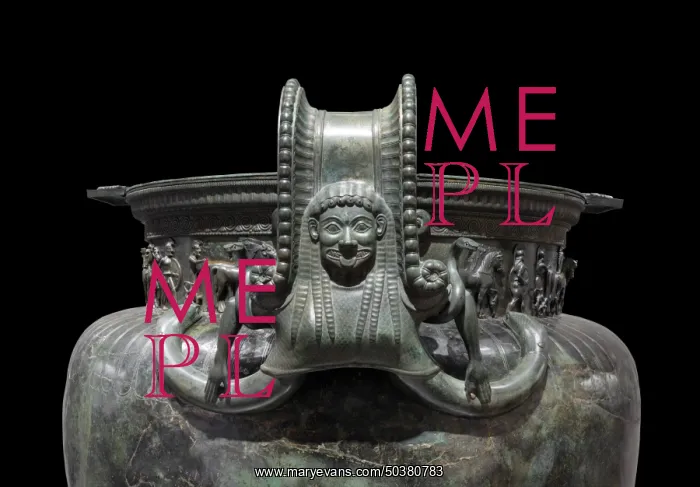
Vix vase, Musee du Pays Chatillonnais, Chatillon-sur-Seine, Burgundy, France
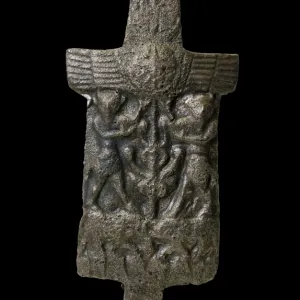
Medusa head with tongue sticking out, curled hair and serpent legs, and frieze of Hoplite soldiers with horses, detail from the Vix vase, Celtic bronze krater, Hallstatt period, c. 530 BC, part of the Tresor de Vix, in the Musee du Pays Chatillonnais, a history art and archaeology museum opened 2009 in the Abbaye Notre-Dame de Chatillon, a Cistercian abbey, in Chatillon-sur-Seine, Cote-d'Or, Bourgogne-Franche-Comte, France. The krater was made in a Greek colony in Sybaris, Italy, and was used to mix water and wine for banquets. The Vix treasure was discovered in 1953, in a burial tomb of a woman known as the Lady of Vix, buried with a box of jewellery and the krater. Picture by Manuel Cohen
Pick your License
Restrictions Only for Ireland and United Kingdom and United States Of America
Abbaye Banquet Bourgogne-franche-comte Chatillon Chatillon-sur-seine Chatillonnais Cote-dor Frieze Gorgon Hallstatt Hoplite Krater Medusa Metalwork Serpent Sybaris Tongue Tresor
Features In These Collections
> Contributors > COH