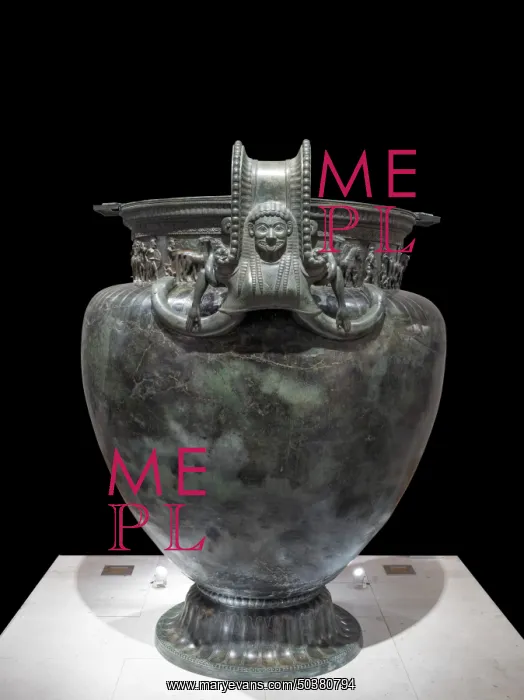
Vix vase, Musee du Pays Chatillonnais, Chatillon-sur-Seine, Burgundy, France
Vix vase, Celtic bronze krater, Hallstatt period, c. 530 BC, part of the Tresor de Vix, in the Musee du Pays Chatillonnais, a history art and archaeology museum opened 2009 in the Abbaye Notre-Dame de Chatillon, a Cistercian abbey, in Chatillon-sur-Seine, Cote-d'Or, Bourgogne-Franche-Comte, France. The krater was made in a Greek colony in Sybaris, Italy, and was used to mix water and wine for banquets. It features 2 Medusa heads with tongue sticking out, curled hair and serpent legs, and a frieze of Hoplite soldiers with horses. The Vix treasure was discovered in 1953, in a burial tomb of a woman known as the Lady of Vix, buried with a box of jewellery and the krater. Picture by Manuel Cohen
Pick your License
Restrictions Only for Ireland and United Kingdom and United States Of America
Abbaye Banquet Bourgogne-franche-comte Chatillon Chatillon-sur-seine Chatillonnais Cote-dor Frieze Gorgon Hallstatt Hoplite Krater Medusa Metalwork Sybaris Tresor
Features In These Collections
> Contributors > COH