The General Strike - Government leaders
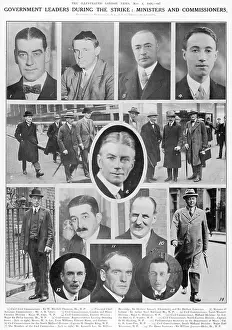
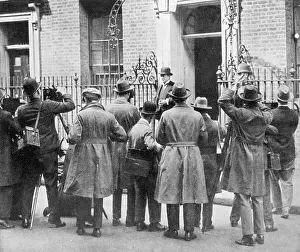
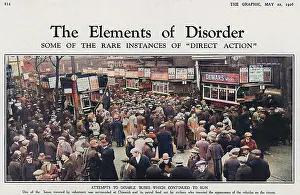
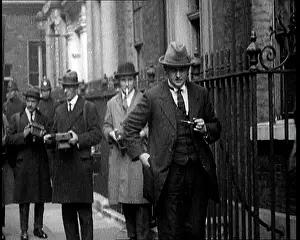
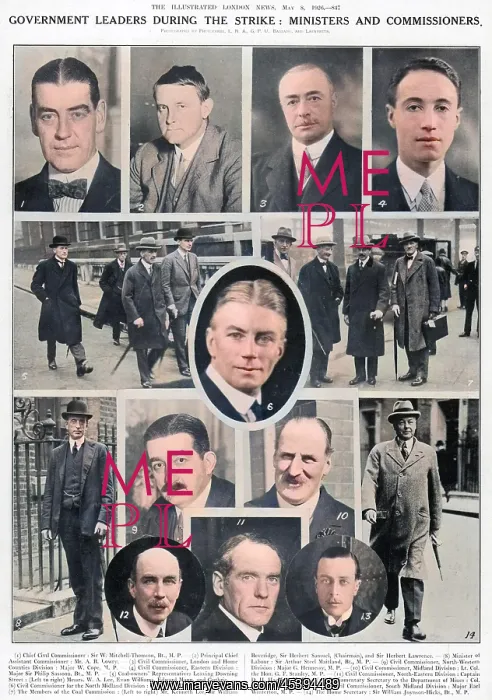
Government leaders during the General Strike: Ministers and Commissioners. 1. Chief Civil Commissioner: Sir W. Mitchell-Thomson, 2. Principal Chief Assistant Commissioner, Mr. A. B. Lowry, 3. Civil Commissioner, London and Home Counties Division: Major W. Cope, 4. Civil Commissioner, Eastern Division: Major Sir Philip Sassoon, 5. Coal-owner's representatives leaving Downing Street: (Left to right) Messrs. W. A. Lee, Evan Williams, Edward Mann, and Guthrie. 6. Civil Commissioner for the North Midland Division: Captain H. Douglas King, 7. The Members of the Coal Commission: (Left to right) Mr. Kenneth Lee, Sir William Beveridge, Sir Herbert Samuel, (Chairman) and Sir Herbert Lawrence. 8. Minister of Labour: Sir Arthur Steel Maitland. 9. Civil Commissioner, Midland Division: Lt. Col. the Hon. G.F. Stanley. 11. Civil Commissioner, North Eastern Division: Captain D. H. Hacking. 12. Parliamentary Secretary to the Department of Mines: Col. G.R. Lane-Fox, 13. Civil Commissioner, South Midland Division: Major Earl Winterton, 14. The Home Secretary: Sir William Joynson-Hicks. In support of a strike by coal miners over the issue of threatened wage cuts, the Trades Union Congress called a General Strike in early May 1926. The strike only involved certain key industrial sectors (docks, electricity, gas, railways) but, in the face of well-organised government emergency measures and lack of real public support, it collapsed after nine days
Pick your License
Beveridge Certain Collapsed Commission Commissioner Commissioners Cope Counties Cuts Downing Evan Guthrie Hacking Hicks Involved Joynson Lack Lowry Maitland Measures Messrs Midland Mines Organised Parliamentary Sassoon Sectors Thomson Threatened Wage Winterton
Features In These Collections
> Contributors > COI