
Astronaut - Comets - NASA - Space - Spacecraft - UFOs
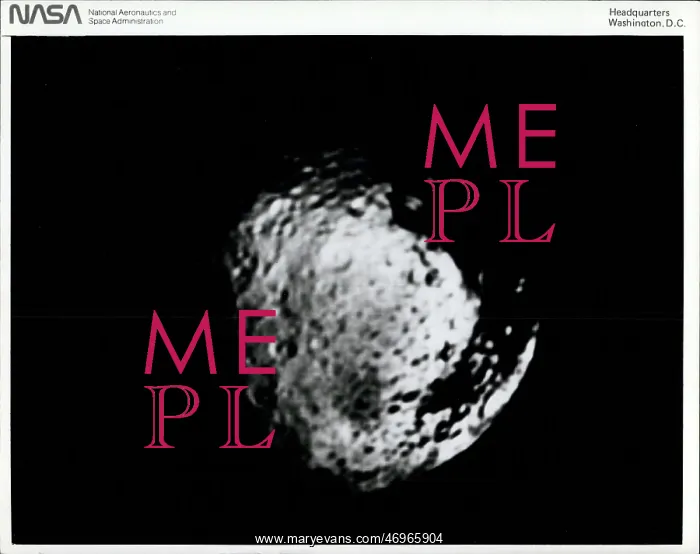
Voyager 2 Photographed Iapetus, the outer most of Saturn's large Satellites, Aug. 22 from a distance of 1.1 million kilometer (680, 000 miles). This image, which shown feature as small at 21 km. (13 mi.) across, has been precessed to reveal as much detail as possible of the bright, icy regions of the northmen trailing hemisphere. The number and forms of impact crater surface of the inner icy satellite (such as Rhea and Mimes) photographed by Voyager I. This similarly suggests an ancient crust dating back to the earl history of the Solar system. Iapetus is noteworthy for the very dark material (seen here in the lower and right hands of the picture0 that apparently covers the satellite's ice crust primarily on his leading hemisphere. Iapetus has a diameter of 1, 450 km. (00 ml) Voyager a passes about four times closer to satellite than did Voyager 1 last fall. The voyager project is managed for NASA by the Jet Propulsion Laboratory, Pasadena, Calif
Pick your License
Restrictions Only for United Kingdom
Calif Closer Crater Crust Dating Feature Forms Hemisphere Impact Kilometer Managed Nasa Northmen Noteworthy Pasadena Passes Possible Propulsion Regions Reveal Satellite Satellites Saturns Similarly Solar Suggests Trailing Voyager
Features In These Collections
> Contributors > KEY


