
Astronaut - Comets - NASA - Space - Spacecraft - UFOs
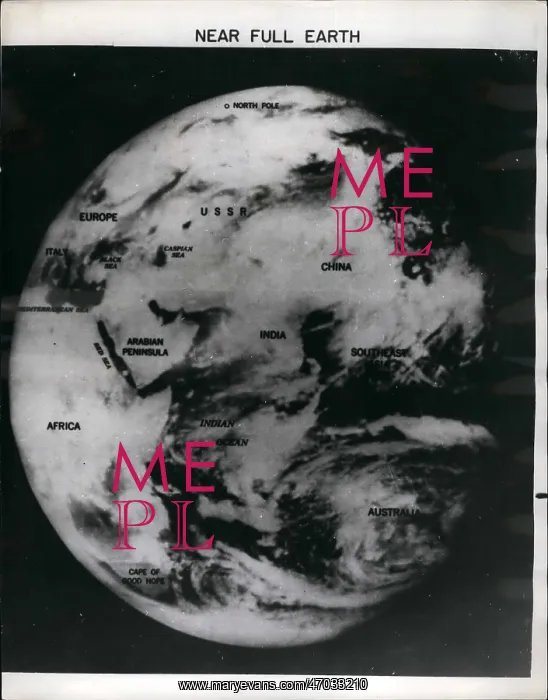
Oct. 10, 1967 - Near full Earth: The American Lunar C- bits - V spacecraft trained its telephoto lens on the sunlit side of the Earth and made this first photograph of the nearly full planet from 214, 806 miles away. The time was 5:05 a.m. EDT, Aug. 8, 1967, and solar noon lay over the centre of Saudi Arabia. Much of the lightest hemisphere was free of cloud cover and the picture contains outlines of the entire east coast of Africa from the Mediterranean to the Cape of Good Hope. Features such as Italy, Greece, Turkey, the Red Sea, the Arabian Peninsula, and the Suez Canal area are visible. The subcontinent of India shines through a light covering of clouds at the centre of the photograph. Near the top lies the North Polar region. When the picture was made Lunar Orbiter V was about 3, 640 miles above the surface of the Moon. The photograph was received at NASA's Deep Space Network tracking station, Madrid, Spain, Aug. 11 and processed at the Langloy research centre, Hampton, Virginia. It is Lunar Orbiter V's telephoto frame 27. THe are of Earth covered extends from 14 West longitude to 135 East longside, a total of about 150 degrees, or five sixths of the full hemisphere. This photograph was first released Aug. 14, 1967, but names of continents and oceans have been superimposed in this picture. The lunar orbiter Project is managed for the National Aeronautics and Space Administration by the Langley research centre, Hampton, Va
Pick your License
Restrictions Only for United Kingdom
Arabia Bits Contains Continents Degrees Entire Extends Hampton Hemisphere Langley Lens Lightest Longitude Lunar Managed Names Nasas Nearly Network Noon Oceans Orbiter Outlines Processed Saudi Shines Sixths Solar Spacecraft Subcontinent Suez Sunlit Superimposed Telephoto Tracking Trained Visible
Features In These Collections
> Contributors > KEY


