
Astronaut - Comets - NASA - Space - Spacecraft - UFOs
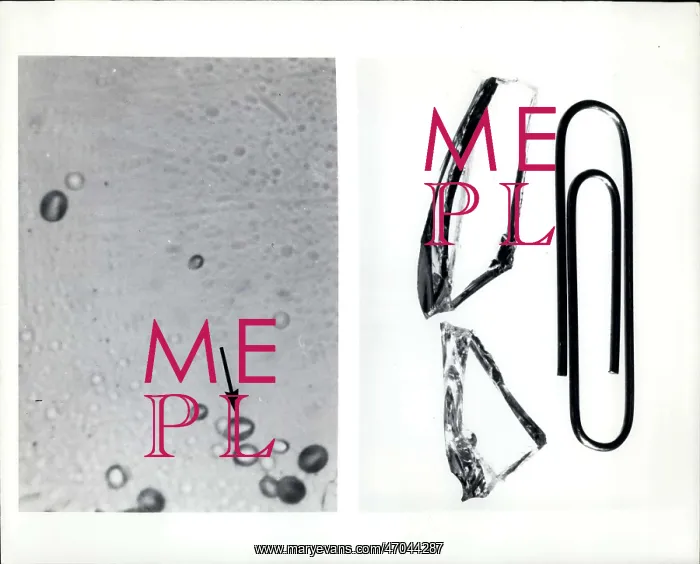
Jan. 15, 1971 - Left: Fragments from a chunk of glass that spent 31 months on a moon aboard the Surveyor III spacecraft have revealed new clues to the rate at which lunar rocks are undergoing erosion. By studying cosmic ray tracks (arrow-right) that accumulated in the glass during its stay on the moon, scientists at the General Electric Research and Development Centre have calculated that particles from space are wearing away the moon's rocks at a rate of about one layer of atoms per year. At this rate, it would take 60 million years to wear away one half inch of rock. the glass fragments are from a filter housed inside the TV camera on Surveyor III, a spacecraft rocketed to the moon in 1967. The TV camera was recovered by the Apollo 12 astronauts on their mission to Ocean of Storms in 1969, and returned to earth. Magnification of photo at right: 230X. The scientists reported their findings yesterday at the Second Annual Lunar Science Conference, held in Houston, Texas under the sponsorship of the National Aeronautics and Space Administration
Pick your License
Restrictions Only for United Kingdom
Accumulated Astronauts Atoms Calculated Chunk Clues Cosmic Erosion Filter Findings Fragments Housed Houston Inch Layer Lunar Magnification Particles Rate Recovered Reported Returned Revealed Rocketed Scientists Spacecraft Spent Sponsorship Stay Storms Studying Surveyor Undergoing
Features In These Collections
> Contributors > KEY


