
Astronaut - Comets - NASA - Space - Spacecraft - UFOs
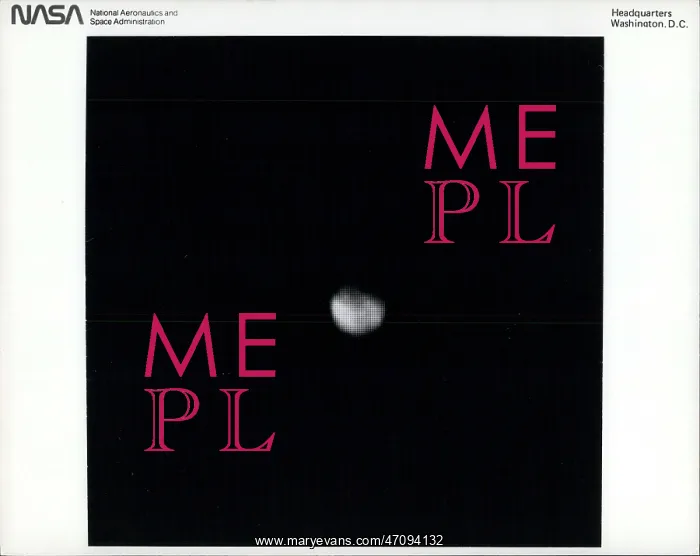
Sep. 11, 1981 - Voyager 2 took this photo of Saturn's outer satellite, Phoebe, on Sept. 4, 1981, from 2.2 million kilometers (1.36 million miles) away. The photo shows that Phoebe is about 200 kilometers (120 miles) in diameter, about twice the size of Earth-based measurements; and dark, with five percent reflectivity - much darker than any other Saturnian Satellite. That, and information from Earth-based observations, indicates Phoeba is almost certainly a captured asteroid, and did not from in the original Saturn nebula as Saturn's other satellites did. Phoebe is the only Saturnian satellite that does not always show the same face to Saturn: Its orbital period is 550 days. Its rotation period (length of day), determined from Voyager observations, is nine to ten hours. Other ground-based observations that indicate that Phoebe is a captured asteroid: It orbits Saturn in the ecliptic plane (the plane in which Earth and most other planets orbit the sun), rather than in Saturn's equatorial plane as the other Saturn satellites do. And Phoebe's orbit is retrograde -- in the direction opposite to than of the other satellites. Voyager is managed for NASA's Office of space science by the Jet Propulsion Laboratory
Pick your License
Restrictions Only for United Kingdom
Asteroid Certainly Darker Determined Diameter Does Ecliptic Equatorial Indicate Indicates Kilometers Managed Measurements Nasas Nebula Observations Opposite Orbit Orbital Orbits Percent Phoebe Phoebes Propulsion Rather Rotation Satellite Satellites Saturn Saturnian Saturns Twice Voyager
Features In These Collections
> Contributors > KEY