
Computers - Electronics - Robots - Technology - TV's
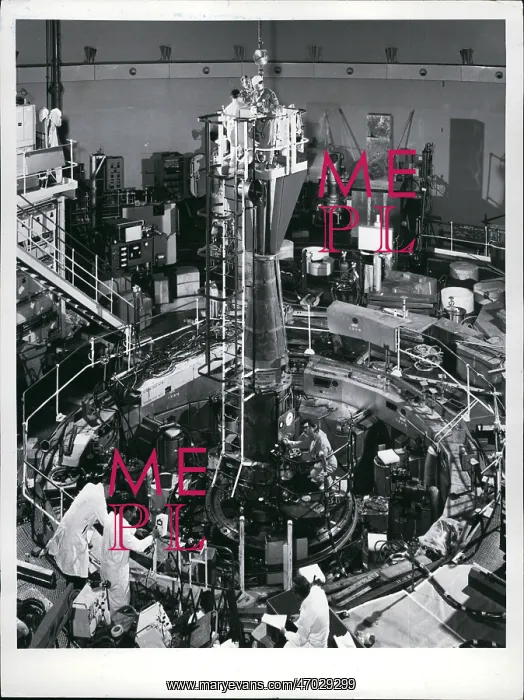
Jun. 06, 1967 - The Fast Reactor Experiment Dounreay. Caithness The Fast Reactor Experiment at Dounreay attained its full power of 60 MW (Th) in July 1963 and since then has been used primarily as an irradiation test facility for future fast reactors, though it is generating about 15 MW of electricity, some of which is fed to the grid. The core can accommodate 324 fuel elements or test samples and the blanket 1872 breeder elements of natural uranium. The driver charge of fuel consists of enriched uranium in the form of hollow rods, canned in niobium. Surplus neutrons from the fission chain reaction in the core are captured in the breeder blanket, and produce plutonium which will ultimately be used as fuel for this type of reactor. The heat produced in the core is removed by liquid sodium-potassium alloy, and transferred to a secondary liquid metal circuit in the primary heat exchangers. These heat exchangers and the reactor are enclosed in a concrete vault within the 135 ft. diameter steel sphere. One of the fuel handling machines in position on the top of the reactor used for unloading a large experimental fuel element which has been under test in D.F.R
Pick your License
Restrictions Only for United Kingdom
Accommodate Alloy Attained Breeder Caithness Canned Circuit Concrete Consists Core Diameter Element Elements Enclosed Enriched Exchangers Experimental Facility Fission Generating Grid Handling Hollow Irradiation Liquid Neutrons Niobium Plutonium Primarily Primary Produce Reactor Reactors Removed Rods Samples Secondary Sphere Surplus Though Transferred Ultimately Unloading Uranium Vault
Features In These Collections
> Contributors > KEY


