
Computers - Electronics - Robots - Technology - TV's
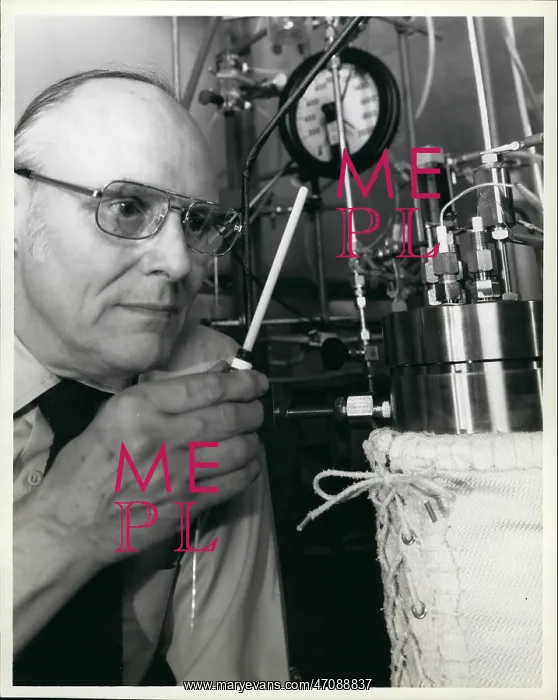
Oct. 10, 1979 - High Temperature probe; The world's first practical sensor for measuring the relative acidity or alkalinity (pH0 of water at extremely high termperatures and pressures has been invented at the General Electric Reseach and Development Center, Schenectady, N.Y. Shown here operating in an autoclave at a temperature of 545 F (285 C) and a pressure of 1, 200 pounds per square inch, the new sensor could play a role in the quest to tap the earth's geothermal energy - the reservoirs of hot water and steam trapped within the crust. It could be employed in assessing the quality of the brines produced by geothermal wells. These brines often are highly corrosive and could damage power generation equipment unless corrective action is taken. Dr. Leonard W. Niedrach holds the ceramic membrane that is the heart of the new GE sensing device
Pick your License
Restrictions Only for United Kingdom
Acidity Assessing Corrective Crust Employed Generation Geothermal Highly Inch Measuring Membrane Often Pounds Practical Pressure Probe Quest Relative Reservoirs Sensing Sensor Temperature Trapped Unless
Features In These Collections
> Contributors > KEY


