
Flags - Maps
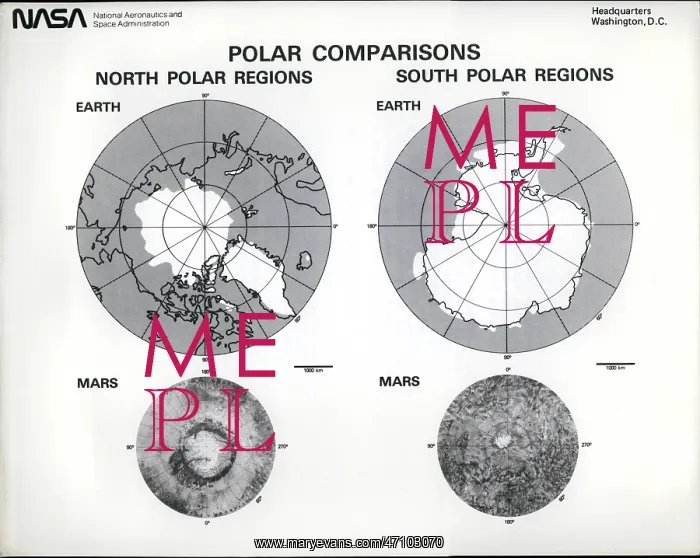
Oct. 10, 1984 - The Polar Regions of Earth and Mars: Like the Earth, Mars has polar caps that wax and wane with the seasons. Because of the much lower temperatures on Mars and the composition of its atmosphere (primarily carbon dioxide), most of its polar snow is actually a thin coating of carbon dioxide frost. However, spacecraft measurements have determined that the small residual ice cap that remains during the summer season in the northern hemisphere is actually made up of water ice. The same is probably true of the southern hemisphere ice cap. This illustration compares the polar regions of Mars, and the Earth at the same scale. in each case the ice caps are shown at approximately their minimum extent. This allows a direct comparison of water ice content. The residual north polar cap of Mars is considerably larger than its south polar cap, while the reverse is true on the Earth. Of course, the area of polar ice cover on the Earth is vastly greater than on Mars, reflecting the abundance of water available and the larger size of our planet. On the Earth ice depths of several kilometers may be found in some of the polar areas. On Mars he depths of the ice cover is unknown but it is undoubtedly quiet thin by earth standards. This again indicates the security of water available on Mars, desert world
Pick your License
Restrictions Only for United Kingdom
Abundance Actually Allows Approximately Available Carbon Coating Compares Comparison Composition Considerably Depths Determined Dioxide Direct Extent Frost Hemisphere However Indicates Kilometers Larger Measurements Minimum Reflecting Regions Residual Spacecraft Standards Temperatures Undoubtedly Vastly Wane
Features In These Collections
> Contributors > KEY


