
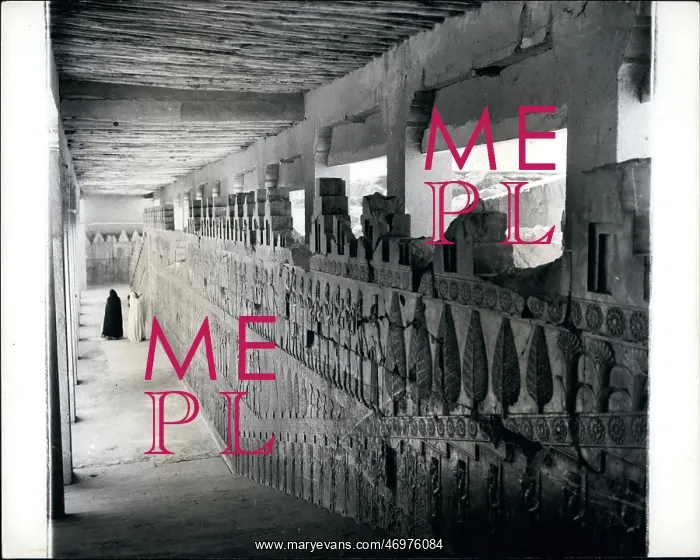
Inside the ancient ruins of Persepolis
Apr. 18 Persepolis - Cradle of Modern Western Civilisation: Here in the very plains of Marvdasht those very ancestors of world civilization, the Persians, started their culture. At Persepolis itself pottery excavated in the last thirty years disclose an early civilisation prior to 4000 BC. In the Persian language Persepolis is called Takhte Jamshid - the throne of Jamshid, the mythical King of Persia. Persians believe that Jamshid was a real figure and that he built the original palaces of Persia which later historically-known Kings completed. It was Darius the Great (521BC) - he extended and consolidated the Persian Empire and gave the idea of a sumptuous palace befitting his gigantic empire. He made the great stone of his own, known as the Tachera, and he started the Palace of Apadan which his son, Xerxes, finished and improved. It would take too long to discuss the effect or Persian culture on the world as a whole, and Greece in particular. But it is beyond a doubt that after the Greek Alexander of Macedon took away the riches of Persepolis, Greek civilisation which is recognised as the father of modern Western culture, flourished suddenly. Persepolis still stands today, an impressive memorial to the origins of the Aryan race, the cradle of Western civilisation. Ancient Persia today ruins of Persepolis Iran, re-visited by a modern camera. These carvings show warriors, temples and emperors of some, 000 years ago
Pick your License
Restrictions Only for United Kingdom
4000 Ancestors Aryan Befitting Believe Carvings Consolidated Cradle Darius Disclose Discuss Doubt Effect Emperors Excavated Extended Finished Flourished Gigantic Idea Impressive Improved Iran Itself Jamshid Language Macedon Mythical Origins Palaces Particular Persepolis Persia Persians Plains Recognised Riches Suddenly Sumptuous Takhte Temples Thirty Xerxes
Features In These Collections
> Contributors > KEY


