
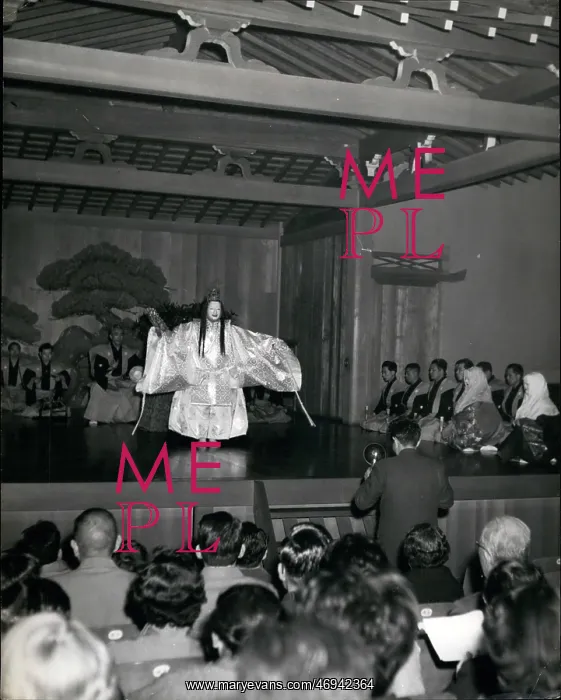
Japanese Noh dancer and audience
Christ's Resurrection - the Subject Of A Japanese Classical Dance Performed For The First Time In History: Revolutionary departure for Tokyo's 500-years-old classical Noh dancers being performed this year. A 30-minute dance depicting or symbolising Christ's Resurrection, takes place in a setting supposed to represent Dawn before the grave of Jesus. As in all Noh Dances, the dancers wear masks, and the one representing Christ has been specially prepared by the New Christian Noh Committee which intends sending replicas to Queen Elizabeth II, the Pope, and the President of the USA. The Noh dance is difficult for a Westerner to appreciate and is the most classical form of Japanese, drama. It is characterized by subtle restraint, and yet depicts the deepest emotions. In its simplest essentials consists of a dance preceded by a dialogue explaining its significance. The dancer is called a shite or doer, and the subordinate characters who do the explaining are a called Waki'. There is a chorus of seven or eight who chant from the side of the stage to the music of a flute, two hand drums and a stick drums. The stage is built to strict rules measuring 18 feet square with curved roof. On the rear wall a pine tree is painted and the other three sides are open. The chorus sits on the right and the musicians at the rear. A long gallery, 9 feet wide, leads to the changing room. The Resurrection Of Christ - As Seen Though The Eyes Of Japan's Noh Dancers: A general view of the audience, the shite or principal dancer, Kuro Hosho, the waki or assistants, and the musicians at the rear
Pick your License
Restrictions Only for United Kingdom
30-minute Appreciate Assistants Changing Chant Characterized Chorus Consists Curved Dances Deepest Departure Depicts Dialogue Difficult Doer Emotions Essentials Explaining Flute Hosho Intends Leads Masks Measuring Preceded Prepared Replicas Represent Representing Restraint Resurrection Rules Sending Shite Significance Simplest Specially Strict Subordinate Subtle Supposed Symbolising Though Tokyos Westerner
Features In These Collections
> Contributors > KEY


