
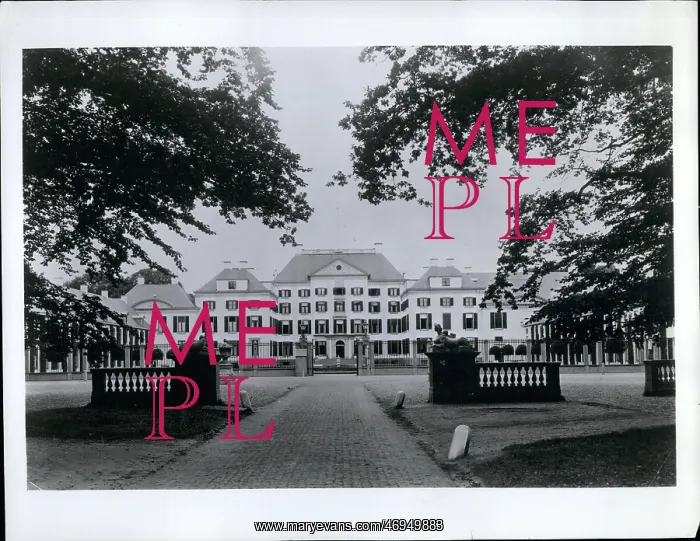
Loo Palace, Netherlands
Feb. 26 Het Loo Palace. The Bridal Couple's future: A manor farm built in a loo, a forest clearing, in the 15th century opens the history of the stately palace situated so ideally in the centuries-old woods near Apeldoorn that it will be the first, temporary residence of Princes Margaret and her husband. Johan Bentinck, Master of the Hunt for the Veluwe region, built a small castle on the site of the farmstead, which was the property of his father, and the family lived there until 1548. It then became the home of five prominent Guelders families after which, in 1685, it was bought by William III, standholder of Holland and king of England, who wished to pursue his favourite sport, the hunt, in the surrounding woods. Shortly afterwards, he decided that the modest hunting lodge must make way for a palace worthy of its owner and with the assistance of the 6.000 men of the neighbouring Hattum garrison it was transformed in the space of two years (1686-1688) into an imposing edifice surrounded by ornamental lakes, gardens and parks designed by the celebrated French landscape gardener Le Notre. Long wings were added to the front and the back of the main part of the building in the following years, and so it was to remain for more than two centuries. After William's death in 1702, its occupants included William V and later Louis Napoleon, appointed king of Holland by his brother, the Emperor Napoleon. Louis repaired the ravages to the Palace which, like all other property of the House of Orange, had suffered damage at the hands of the French soldiers. Loo Palace was also a favourite summer residence of King William III and his wife Sophie. At the beginning of this century the government architect H.C. Peertes carried out extensive alterations to the palace: an extra storey was built on to the central part of the building, new wings were added and the appearance of the outbuildings was changed. The handsome interiors designed by the celebrated Daniel Marot remained intact. After her abdication in 1948, Queen Wilhelmina retired to Loo Palace, where she wrote her memoirs Lonely but no Alone
Pick your License
Restrictions Only for United Kingdom
1548 1685 1702 Abdication Added Afterwards Alterations Apeldoorn Appointed Assistance Bentinck Bought Bridal Celebrated Centuries Changed Clearing Decided Edifice Extensive Extra Farmstead Favourite Gardener Garrison Guelders Handsome Ideally Imposing Intact Johan Lived Lonely Marot Memoirs Modest Neighbouring Occupants Ornamental Outbuildings Princes Prominent Pursue Ravages Remain Remained Repaired Retired Shortly Situated Stately Storey Suffered Surrounding Temporary Transformed Veluwe Wilhelmina Wished Worthy Wrote
Features In These Collections
> Contributors > KEY


