
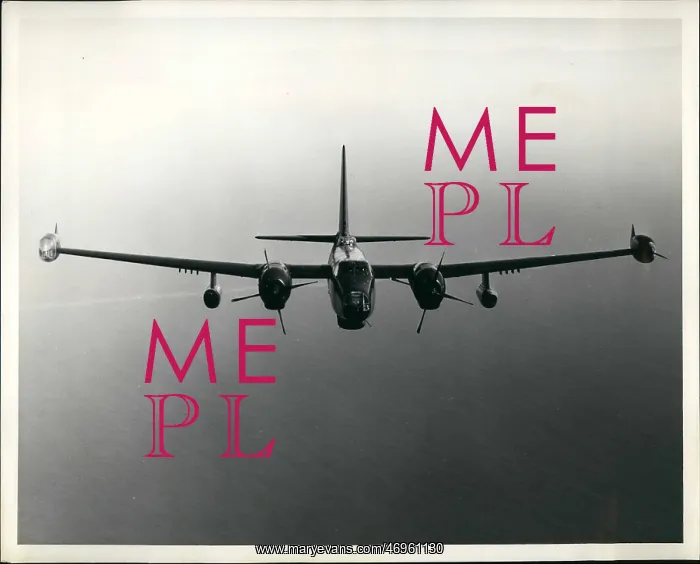
US Navy P2V jet aeroplane in flight
Mar. 22 King Neptune Goes Jet -- Huge four-bladed propellers come to a feathered rest on this U.S. Navy P2V-5 Neptune as it proves its ability to fly powered only by auxiliary jet engines in pods under the wing. In extensive testing of the jet-boost installation on two planes, pilots have reported 100-percent-perfect operating performance -- no flame-outs and no failure to ignite. But they confess it takes a while to grow accustomed to flying behind motionless propellers, as in the test pictured above. The turbine power plants were added to give the anti-submarine and mine-laying plane added power and speed for tight combat situations and improved performance on restricted landing fields. For regular patrol work the Neptune cruises on its two 3500 hp. Wright turbo-compound engines, designed for economical long-range operations and high take-off power. The Westinghouse J-34 jets, each producing 3400 pounds of thrust, are equal to a third turbo-compound engine, giving the ship the take-off qualities of a gull and a target elusiveness of a duck. Pods are quickly detachable. In this photo the jet-flying P2V was cruising at about 200 mph indicated air speed about 175 feet behind the camera plane, at an altitude of 5000 feet
Pick your License
Restrictions Only for United Kingdom
3400 3500 5000 Ability Accustomed Added Altitude Anti-submarine Auxiliary Confess Cruises Cruising Detachable Economical Equal Extensive Failure Grow Gull Ignite Improved Indicated Installation Jets Long-range Motionless Neptune Operating Pods Pounds Producing Propellers Proves Qualities Quickly Regular Reported Restricted Situations Take-off Target Thrust Tight Turbine Westinghouse
Features In These Collections
> Contributors > KEY


