
Refugees
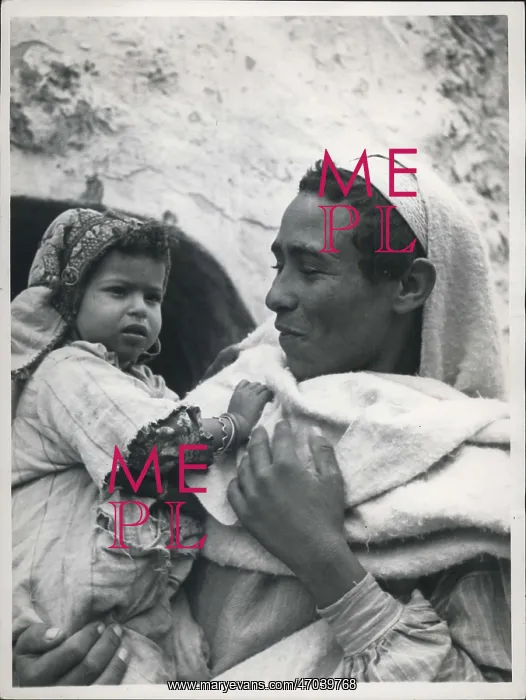
The Larder Fortress In The Jebel. Perched on the plateau of a Jebel mountain at Nalut, on the frontier between Tripolitania and Tunisia, the Berbers still store their meagre harvests of wheat, dates and olive oil in oblong shaped caves hollowed out of the inner walls and ramparts of a fortress built centuries ago for this purpose. Years ago the Jebel Berbers were constantly raided by other tribes who stole their women and animals leaving the plain they took refuge in the mountains building this gigantic fortress to house their sheikh and their food. Round the fortress they built a town of stone to house the 6, 000 members of the tribe. During periods of peace they descended to the plain and while the men formed a defensive perimeter the women gathered food and sowed crops. Gradually the Berbers increased in numbers finally outnumbering their attackers enabling them to leave their fortress and re-settle in the plains. But the store is still used today guarded now by a watchman and his family who receives in payment for his duties a small percentage of the food stored. Only bits of wire and wooden pegs keep the doors closed, to lock one's cave with a padlock would be an insult only erased by the shedding of blood. The son of the Watchman of the Nalut Fortress, with the latest addition to his family. Times are more peaceful now than when his ancestors lived in the fortress village
Pick your License
Restrictions Only for United Kingdom
Addition Ancestors Attackers Berbers Bits Caves Centuries Constantly Crops Dates Descended Duties Enabling Erased Finally Formed Gigantic Gradually Guarded Harvests Hollowed Increased Insult Jebel Larder Lived Meagre Nalut Oblong Olive Outnumbering Padlock Payment Pegs Percentage Perimeter Periods Plains Plateau Purpose Raided Ramparts Refuge Shedding Sheikh Sowed Stored Tribes Tripolitania Watchman Wheat
Features In These Collections
> Contributors > KEY


