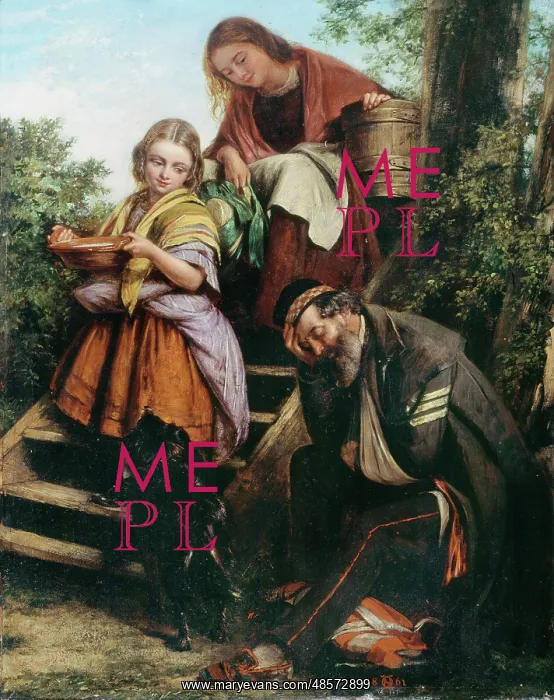
The Soldier?s Return, 1861
The Soldier?s Return, 1861 - Oil on board laid down on panel, signed in monogram and dated lower centre ?HON/1861?, by Henry Nelson O?Neil (1817-1880), 1861. A tired and injured veteran sits slumped beside a stile, while a woman and child bring him food. Presumably discharged from military service due to disability, the sergeant appears without means even to buy civilian clothes. He wears an assortment of regimental clothing, including a glengarry (forage cap) of the 93rd (Highland) Regiment of Foot. This painting was almost certainly intended as a continuation of O'Neil's famous pair of narrative paintings, showing troops leaving for and returning from the Indian Mutiny (1857-1859), Eastward Ho! August 1857 and Home Again'. In Home Again, the highlander is seen distressed by a Dear John letter. He appears here having become a vagrant, reliant upon charity. During the nineteenth century, the treatment of ex-servicemen brought the Army much adverse publicity. As late as the 1890s, one-third of those discharged on medical grounds received no pension. Small invalidity pensions were only granted if there was proof that sickness or injury was a direct result of military service or, in some cases, to those who had served a minimum of 14 years. Soldiers usually enlisted for 21 years, although they could be released beforehand if unfit, for misconduct, or if purchasing a discharge. If released for medical reasons but with good character, there were some forms of assistance. Institutional care in the two military hospitals provided for a few. However, most veterans were unskilled and, although fit men could still find labouring work, invalids were not likely to be employed. This almost certainly meant the workhouse
Pick your License
1817 93rd Adverse Although Appears Assistance Assortment Beforehand Bring Cases Certainly Continuation Dear Direct Disability Discharge Discharged Distressed Eastward Employed Enlisted Forage Forms Glengarry Granted Highland Highlander Homecoming Hospitals However Institutional Intended Invalids Labouring Laid Likely Means Meant Minimum Misconduct Monogram Mutiny Narrative Pension Pensions Presumably Proof Provided Purchasing Reasons Regimental Reliant Result Returning Servicemen Sickness Slumped Stile Tired Unfit Unskilled Usually Vagrancy Vagrant Veterans
Features In These Collections
> Contributors > NAM