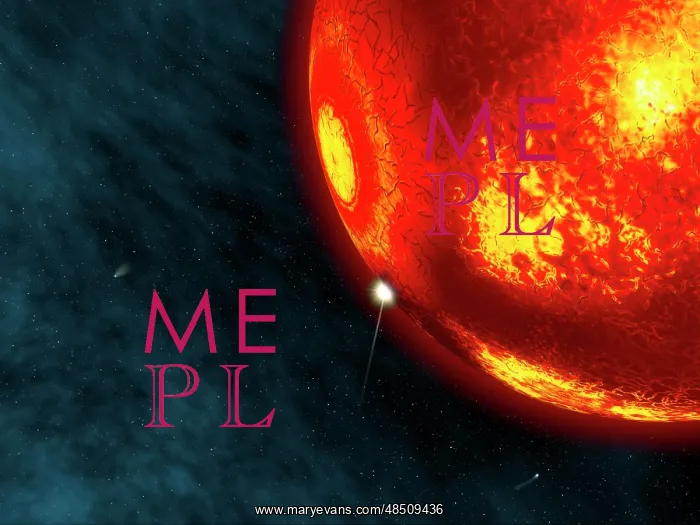
Artist's concept of an early Earth impact
A molten, infant Earth is impacted by an object about 10 miles in diameter, releasing 200 million times as much energy as the largest manmade explosion. While this collision appears negligible when compared to the scars of much larger encounters, a similar impact four billion years later may have resulted in the extinction of the dinosaurs. The Earth accrued the majority of its mass during the 100 million years following the formation of the Sun, a period referred to as the cosmic bombardment. During this era of frequent impacts and radioactive heating, the entire Earth remained molten long enough for the heavy metals iron and nickel to settle to the center of the Earth while lighter silicates floated to the surface. Today, over four and a half billion years later, the Earth is still cooling. The silicates, forming a crust only a few tens of miles thick, still float on an ocean of molten metals and minerals, and the temperature at the center of the Earth may yet be hotter than the surface of the Sun
Pick your License
Astrobiology Astrogeology Astronomical Collision Comet Cosmic Cosmology Destiny Exobiology Exogeology Fiery Hadean Impact Lava Magma Meteorite Molten Neoproterozoic Planetary Precambrian Primordial Radioactive Semicircle Smashing Solar Temperature Universe
Features In These Collections
> Contributors > STO