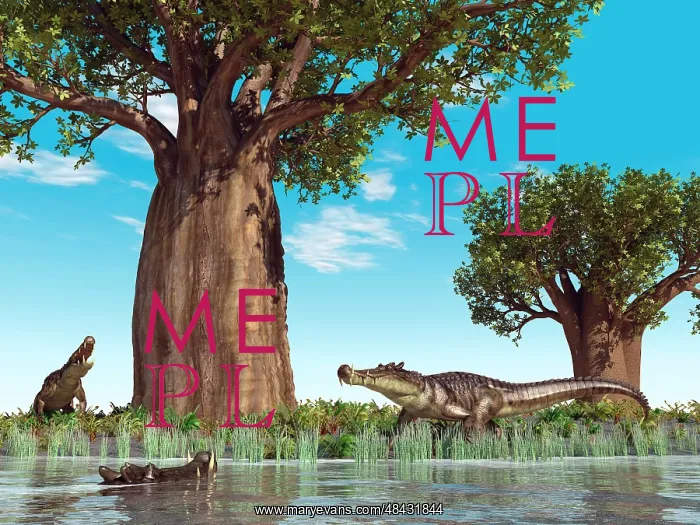
Kaprosuchus crocodyliforms near a baobab tree in a ?
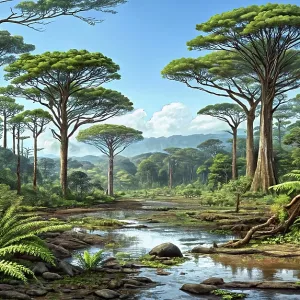
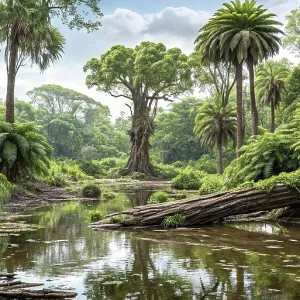
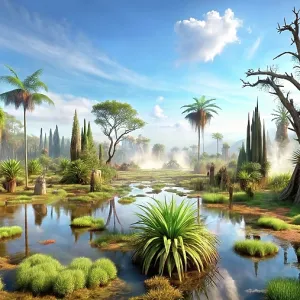
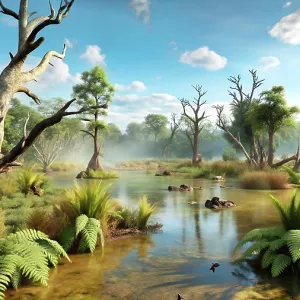
20-foot-long, 1-ton mahajangasuchid crocodyliforms of the genus Kaprosuchus mill about at water's edge near a baobab tree 95 million years ago in what is today Africa. A distant relative of the crocodile, and somewhat larger than modern saltwater crocodiles, Kaprosuchus is notable for boar-like tusks that that project above and below its skull (lending it the nickname BoarCroc). With legs longer than modern crocodiles, Kaprosuchus may have roamed Africa's plains in search of prey which likely included dinosaurs. Baobabs, trees of the genus Adansonia from the mallow family, are large, drought-resistant trees with very thick trunks (a much as 40 feet in diameter) and growing as tall as 100 feet. The thick trunks can store an enormous amount of water. Baobabs are deciduous, shedding their leaves during the dry season. The ground foliage is made up of varieties of fern while the reed-like water plants are in fact horsetails
Pick your License
Adansonia Baobab Beginnings Crocodile Crocodyliform Deciduous Ecosystem Fang Fern Grazing Kaprosuchus Paleobotany Paleogeography Roaming Savanna Snout Swamp Terrain Thick Trunks Tusk Wetlands
Features In These Collections
> Contributors > STO