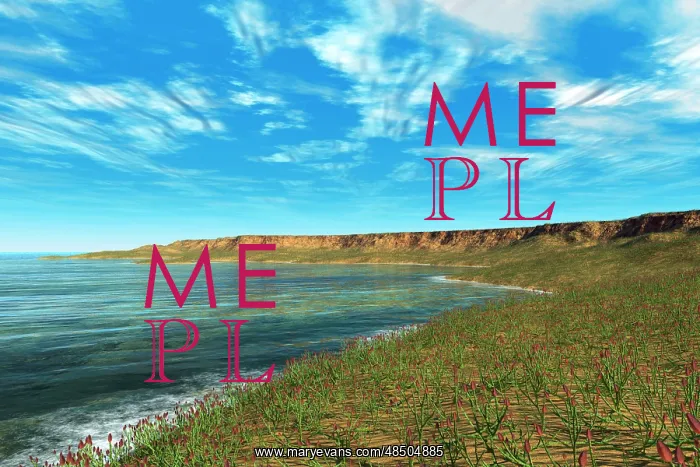
Thousands of individual Aglaophyton populate an Early ?
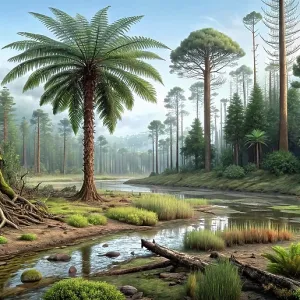
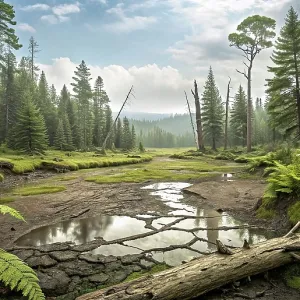
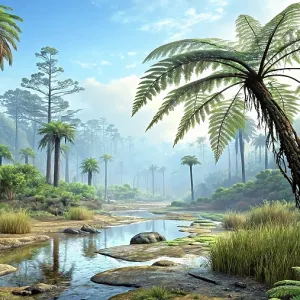
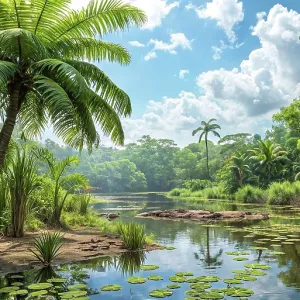
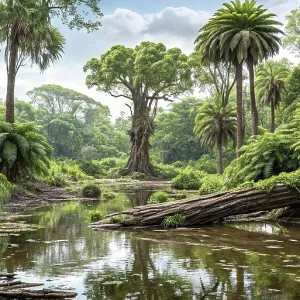
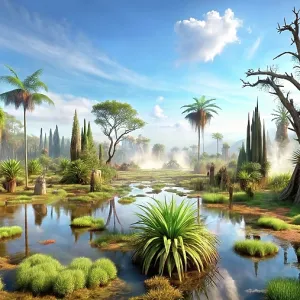
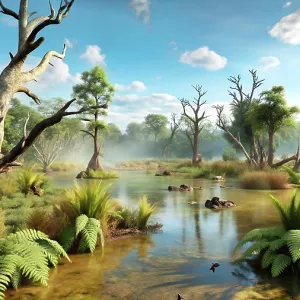
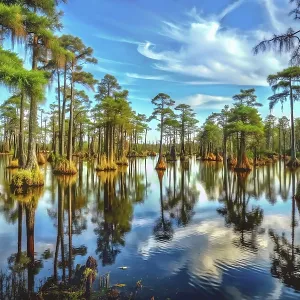
Thousands of individual Aglaophyton populate an Early Devonian bay (in this case the remains of an ancient crater) 415 million years ago. Standing about 10 inches tall, Aglaophyton consisted of simple, branching stalks topped with sporangia. The sporangia (here colored red) held spores for reproduction. (Note that the colors are only a guess as these early terrestrial plants long ago became extinct during the Middle Devonian.) Instead of roots, these simple plants had horizontal stems with fibrous rhizoids that may have drawn moisture and nutrients from the soil with the aid of mycorrhizal fungi
Pick your License
Beginnings Biology Devonian Ecosystem Estuary Fungus Gulf Inlet Mesa Organism Origin Paleobiology Paleobotany Paleoecology Paleogeography Paleozoic Reproduction Seedling Shoreline Soil Spore Sporophyte Stem Vegetation Wetlands
Features In These Collections
> Contributors > STO