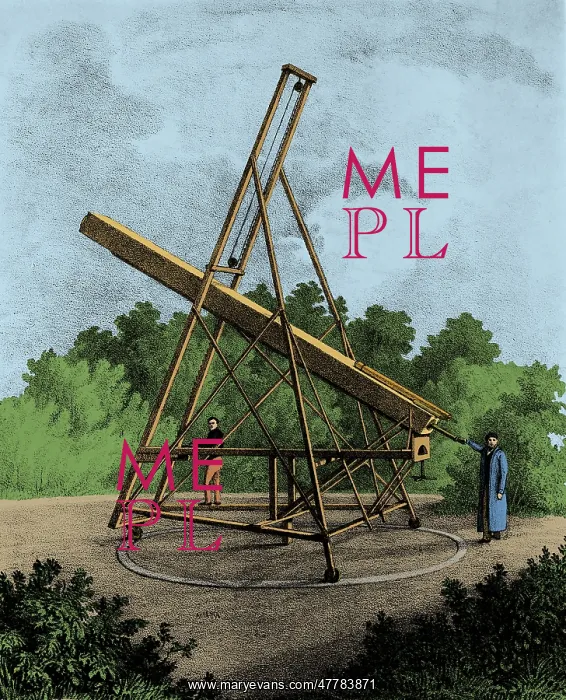
Achromatic Refracting Telescope, c. 1831
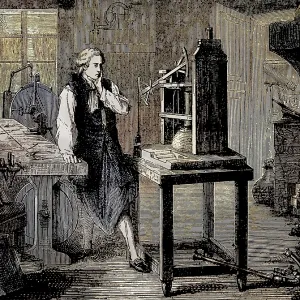
Temporary mounting of an achromatic refracting telescope, the property of E.J. Cooper, Esq. Lithograph from 1831. Illustrated London News. The achromatic refracting lens was invented in 1733 by an English barrister named Chester Moore Hall, although it was independently invented and patented by John Dollond around 1758. The design overcame the need for very long focal lengths in refracting telescopes by using an objective made of two pieces of glass with different dispersion, crown and flint glass, to limit the effects of chromatic and spherical aberration. Each side of each piece is ground and polished, and then the two pieces are assembled together. Achromatic lenses are corrected to bring two wavelengths (typically red and blue) into focus in the same plane. The era of the great refractors in the 19th century saw large achromatic lenses culminating with the largest achromatic refractor ever built, the Great Paris Exhibition Telescope of 1900
Pick your License
Restrictions Only for Ireland and United Kingdom
1831 Achromatic Astronomical Observatory Refracting Refractor Telescope
Features In These Collections
> Contributors > PHR