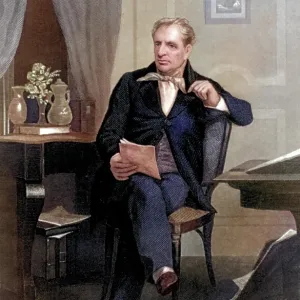

Alberto Santos-Dumont, Brazilian Aviation Pioneer
Alberto Santos-Dumont (July 20, 1873 - July 23, 1932) was a Brazilian aviation pioneer. The heir of a wealthy family of coffee producers, he dedicated himself to aeronautical study and experimentation in France, where he spent most of his adult life. He designed, built, and flew the first practical dirigible, demonstrating that routine, controlled flight was possible. He won the Deutsch de la Meurthe prize in 1901 on a flight that rounded the Eiffel Tower, and made him one of the most famous people in the world during the early 20th century. He flew an airplane of his own design and construction, the 14-bis or oiseau de proie (bird of prey), the first heavier-than-air flight to be certified by the A?ro Club de France and the F?d?ration A?ronautique Internationale. In his homeland, he is considered a national hero and the father of aviation, having his name written in Brazilian Hero Panth?on. Santos-Dumont, seriously ill, and said to be depressed over his multiple sclerosis (not confirmed) and the use of aircraft in warfare during S?o Paulo's Constitutionalist Revolution committed suicide by hanging himself in 1932 at the age of 59
Pick your License
Restrictions Only for Ireland and United Kingdom
Alberto Brazilian Committed Controlled Dirigible Dumont Heavier Hydroplane Oiseau Practical Proie Santos Santos Dumont Santos-dumont Suicide
Features In These Collections
> Contributors > PHR