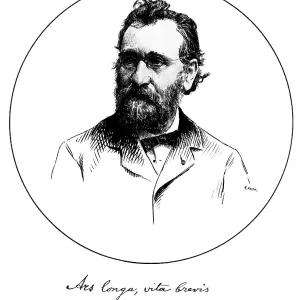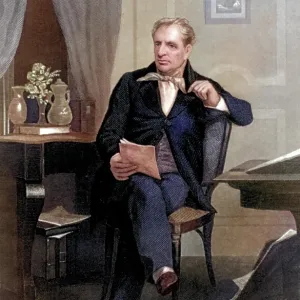

Alexis Carrel, French Surgeon and Eugenicist
Alexis Carrel (June 28, 1873 - November 5, 1944) was a French surgeon and biologist. Between 1901 and 1910 Carrel developed a new techniques for suturing blood vessels called triangulation, which was inspired by sewing lessons he took and led to his Nobel Prize in 1912. He co-authored a book with famed pilot Charles A. Lindbergh, The Culture of Organs, and worked with Lindbergh in the mid-1930s to create the perfusion pump, which allowed living organs to exist outside of the body during surgery. In 1935, Carrel published a book titled L'Homme, cet inconnu (Man, The Unknown), which became a best-seller. It contained his own social prescriptions, advocating, in part, that mankind could better itself by following the guidance of an elite group of intellectuals, and by implementing a regime of enforced eugenics. He was a regent for the French Foundation for the Study of Human Problems during the Nazi occupation of Vichy France which implemented the eugenics policies there; his association with the Foundation led to allegations of collaborating with the Nazis. He died in 1944 (before he could be tried for treason) at the age of 71
Pick your License
Restrictions Only for Ireland and United Kingdom
Alexis Biologist Biology Carrel Collaborator Eugenicist Eugenics Laureate Nobelist Recipient Surgeon Triangulation
Features In These Collections
> Contributors > PHR