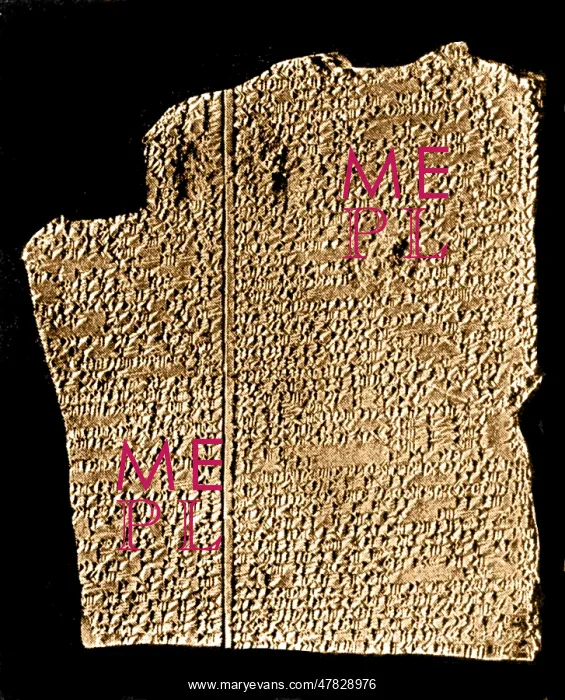
Amarna Tablet, Deluge, Reverse
The Amarna tablets are an archive, written on clay tablets, primarily consisting of diplomatic correspondence between the Egyptian administration and its representatives in Canaan and Amurru during the New Kingdom. The Amarna letters are unusual in Egyptological research, because they are mostly written in Akkadian cuneiform, the writing system of ancient Mesopotamia, rather than that of ancient Egypt. The written correspondence spans a period of at most thirty years. The Amarna letters are of great significance for biblical studies as well as Semitic linguistics, since they shed light on the culture and language of the Canaanite peoples in pre-biblical times. The letters, though written in Akkadian, are heavily colored by the mother tongue of their writers, who spoke an early form of Canaanite, the language family which would later evolve into its daughter languages, Hebrew and Phoenician
Pick your License
Restrictions Only for Ireland and United Kingdom
Akkadian Alphabet Amarna Artifact Assyria Assyrian Babylon Canaan Canaanite Chirography Clodd Consisting Correspondence Cradle Cuneiform Deluge Diplomatic Egyptology Evolve Franca Heavily Hebrew Language Languages Lingua Linguistics Mesopotamia Mostly Phoenician Primarily Rather Semitic Shed Significance Spans Spoke Studies Tablet Tablets Thirty Though Tongue Worldwide
Features In These Collections
> Contributors > PHR