Apiculture, Beekeeping, 18 Century
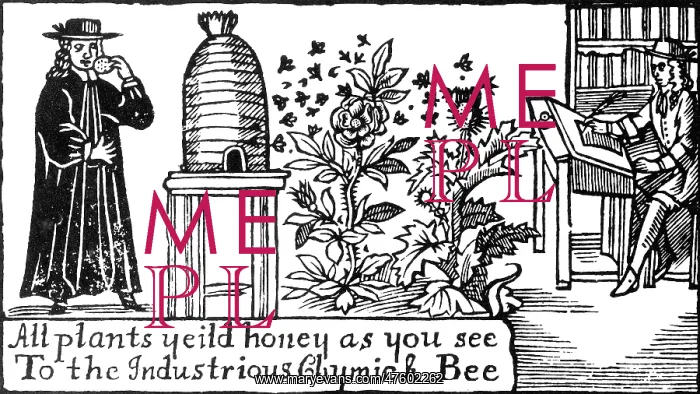
All plants yield honey as you see. To the industrious Chymick bee. A clergyman standing beside a beehive holds a honeycomb to his face while bees fly towards a rose of England and a thistle of Scotland; on the right, a scholar sits writing at a desk with books on a shelf behind him. The technology of beekeeping has remained fairly constant throughout the centuries. Beekeeping is the maintenance of honey bee colonies, commonly in hives, by humans. A beekeeper (or apiarist) keeps bees in order to collect honey and other products of the hive (including beeswax, propolis, pollen, and royal jelly), to pollinate crops, or to produce bees for sale to other beekeepers. A location where bees are kept is called an apiary or bee yard'. Honey is a sweet food made by bees using nectar from flowers. Beekeeping practices encourage overproduction of honey so the excess can be taken from the colony. Honey bees are well adapted to collecting and moving pollen and are the most commonly used pollinators. Pollination management is becoming an increasingly important part of horticulture. Factors that cause the loss of pollinators include pesticide misuse, monoculture and the loss of habitat and forage to name just a few. Feral honey bee populations in the United Staes have dropped about 90% in the past 50 years and at the same time managed honey bee colonies have dropped by about two thirds
Pick your License
Restrictions Only for Ireland and United Kingdom
1706 Apiarist Apiary Apiculture Beehive Beekeeper Beekeeping Colonies Hive Honey Honeybee Honeycomb Horticulture Management Pollinating Pollination Pollinator Scholar Thistle Woodblock
Features In These Collections
> Contributors > PHR