Aztec Calendar Stone
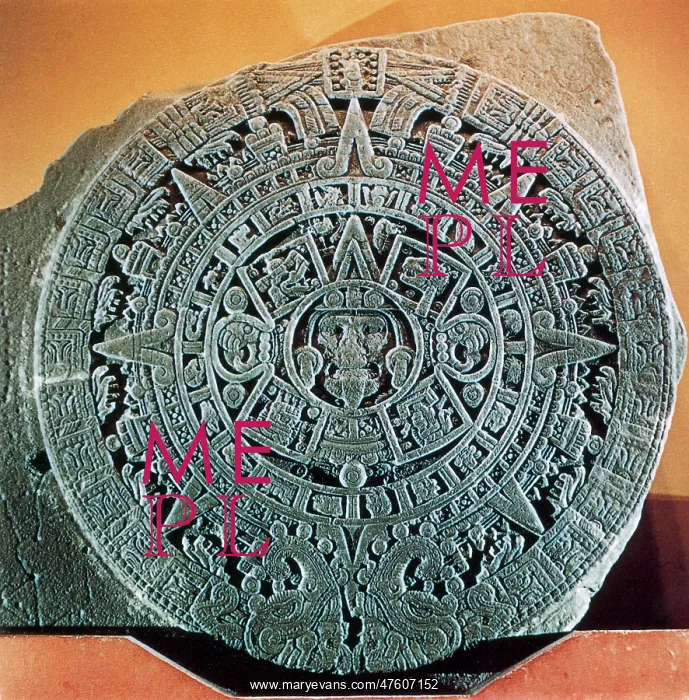
The most precious relic of Pre-Columbian culture in Mexico is the Aztec Calendar Stone (Mexica sun stone, Stone of the Sun). On display at the National Museum of Anthropology in Mexico City, Mexico, it measures thirteen feet in diameter and weighs twenty-four tons and carved into porphyritic basalt. A blend of real science and Aztec mythology. The stone was carved in 1592. The face of the stone contains mythological and astrological figures and signs in geometrical order. The outer border contains two serpents which represent time and the chief Aztec gods. Within this border are the rays emanating from the central figure which represents Tonatiub, the Sun god. To the amazement of archaeologists, the stone, when deciphered, revealed a sophisticated knowledge of astronomy. Aztec astronomy, based chiefly on astrology, divided the solar year into 18 months of 20 days each
Pick your License
Restrictions Only for Ireland and United Kingdom
1592 Anthropology Astrological Aztec Basalt Calendar Columbian Diameter Eighteen Gods Mesoamerica Mexica Pre Columbian Pre-columbian Relic Serpents Solar Thirteen Tons
Features In These Collections
> Contributors > PHR