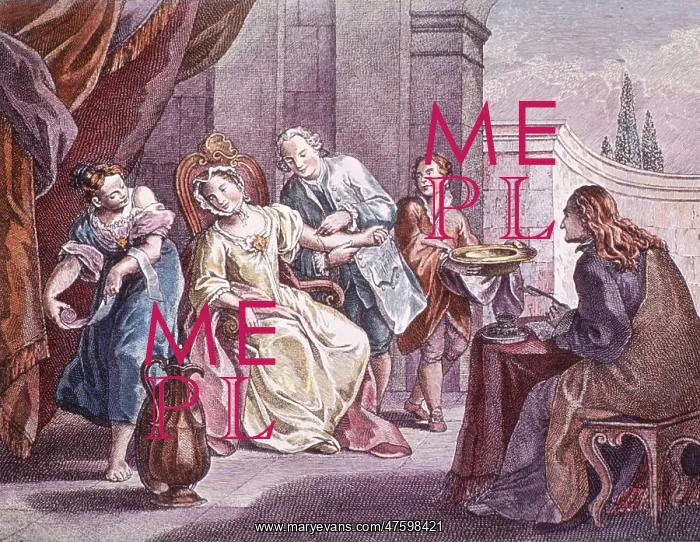
Barber-Surgeon, Bloodletting
A barber-surgeon opens a vein in a woman's arm, another woman waits nearby with a bandage and a boy stands with a basin; a man seated at a table observes. In Europe in the 13th century a new type of craftsmen emerged in towns; the barber-surgeon. They cut hair, they pulled teeth and they performed simple operations such as amputations and setting broken bones and looking after soldiers during or after a battle. Barber-surgeons performed a technique for reconstructing the nose paving the way for the development of modern plastic surgery. The barber surgeon was one of the most common medical practitioners of medieval Europe. Traditionally barbers have a white and red striped pole outside their shop. In the Middle Ages, when many people were illiterate, barber-surgeons hung out a white and red pole to represent blood and bandages. Bloodletting (or blood-letting) is the withdrawal of often little quantities of blood from a patient to cure or prevent illness and disease. Bloodletting was based on an ancient system of medicine in which blood and other bodily fluid were considered to be humors the proper balance of which maintained health, but it often weakened sick patients. It was the most common medical practice performed by doctors from antiquity up to the late 19th century, a time span of almost 2, 000 years
Pick your License
Restrictions Only for Ireland and United Kingdom
Amputation Barber Barber-surgeon Bleeding Blood Letting Blood-letting Bloodletting Bones Breathing Cure Humors Letting Maintain Prevent Pulled Quackery Quantity Reshaping Rhinoplasty Surgeon Surgery Vein Weakened
Features In These Collections
> Contributors > PHR