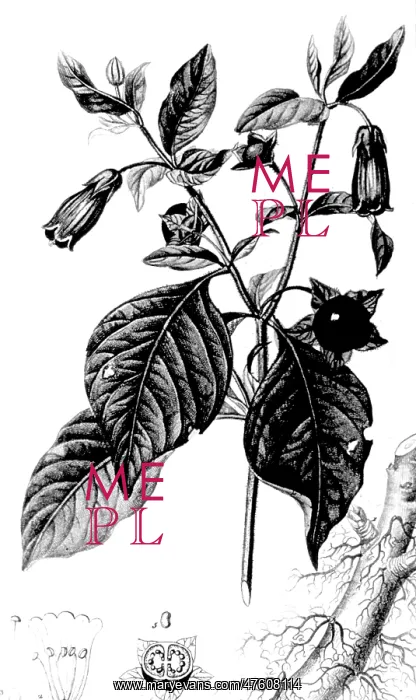
Belladonna, Alchemy plant
Etching, 1815-20. Stem of plant showing foliage, flower, seed pod (also shown in cross section) and a portion of the woody structure. Atropa belladonna is a perennial herbaceous plant in the family Solanaceae, native to Europe, North Africa, and Western Asia. The foliage and berries are extremely toxic, containing tropane alkaloids. These toxins cause delirium and hallucinations and are also used as pharmaceutical anticholinergics. The drug atropine is derived from the plant. Atropa belladonna has a history of use as a medicine, cosmetic, and poison. Before the Middle Ages, it was used as an anesthetic for surgery, ancient Romans used it as a poison and it was used to make poison tipped arrows. The genus name atropa comes from Atropos, one of the three Fates in Greek mythology, and the name bella donna is derived from Italian and means beautiful woman'. This deadly poisonous herb is associated with the Roman war goddess Bellona. Uses in witchcraft and magic: astral work, baneful spells, sorcery, crone work, war magic and protector of soldiers
Pick your License
Restrictions Only for Ireland and United Kingdom
1815 Alchemic Alchemy Anesthetic Astral Atropa Bella Belladonna Bellona Berries Cherries Crone Deadly Delirium Devils Hallucinations Herb Herbaceous Medicinal Nightshade Perennial Pharmaceutical Plantae Poison Poisonous Protector Solanaceae Sorcery Spells Surgery Toxic Witchcraft
Features In These Collections
> Contributors > PHR