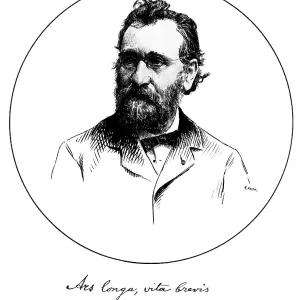
Blaise Pascal, French Polymath
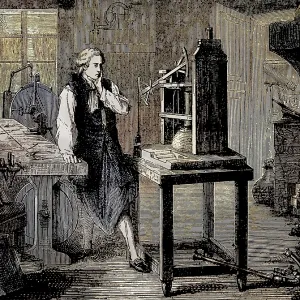
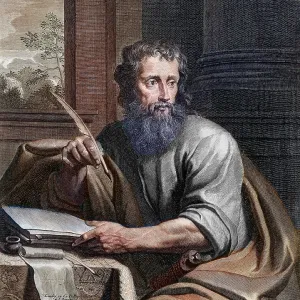
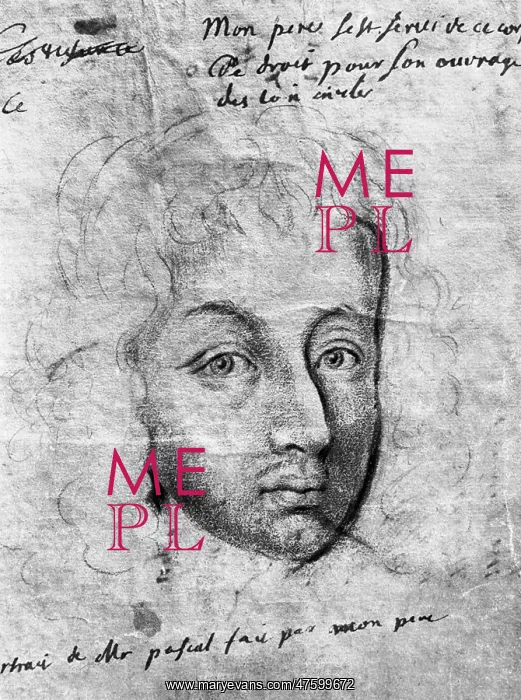
Blaise Pascal (1623-1662), was a French mathematician, physicist, inventor, writer, Catholic philosopher and child prodigy. He made important contributions to the study of fluids, and clarified the concepts of pressure and vacuum. While still a teenager, he started some pioneering work on calculating machines, and after three years of effort he invented the mechanical calculator. Pascal was a mathematician of the first order. He helped create two major new areas of research. He wrote a significant treatise on the subject of projective geometry at the age of sixteen, and later corresponded with Pierre de Fermat on probability theory, strongly influencing the development of modern economics and social science. His Trait? du triangle arithm?tique ('Treatise on the Arithmetical Triangle') of 1653 described a convenient tabular presentation for binomial coefficients, now called Pascal's triangle. Prompted by a friend interested in gambling problems, he corresponded with Fermat on the subject, and from that collaboration was born the mathematical theory of probabilities. An autopsy performed after his death revealed grave problems with his stomach and other organs of his abdomen, along with damage to his brain
Pick your License
Restrictions Only for Ireland and United Kingdom
1623 1662 Arithmetical Binomial Blaise Calculate Calculator Coefficients Contribute Develop Economics Fluids Geometry Mathematical Mathematician Mechanical Pascal Pascals Polymath Pressure Probability Prodigy Projective Theory Traite Treatise Vacuum
Features In These Collections
> Contributors > PHR