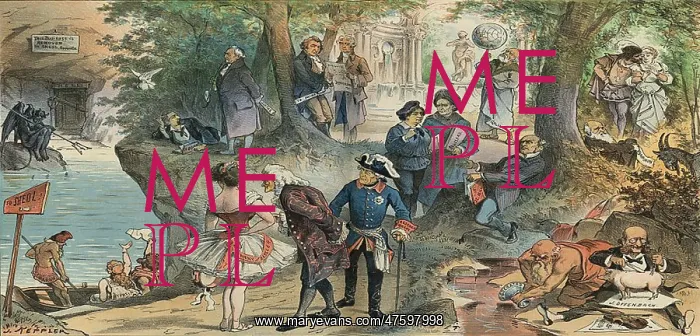
This Business is Removed to Sheol, Opposite, 1885
Chromolithograph entitled: Sheol. Shows a number of historical figures enjoying the pleasant atmosphere of Sheol after suffering the flames of Hell; at left is a dejected Devil sitting beneath a sign that states This Business is Removed to Sheol, Opposite'. Among those ferried across the river by Charon are Hypatia, Fanny Elssler, Voltaire, Frederick the Great, Socrates, Jacques Offenbach, Charles Darwin, John Stuart Mill, Jean-Jacques Rousseau, George Sand, Galileo, Thomas Jefferson, Thomas Paine, Johann Wolfgang von Goethe and Heinrich Heine. Sheol, in Hebrew, means a grave or pit, the place where the dead gathered. It was located beneath the earth, perhaps at the roots of mountains. The dead were thought to lead a conscious shadowy existence there, they were not in torment, but had neither hope nor satisfaction. The inhabitants of Sheol were shades (rephaim), entities without personality or strength, cut off from God. In some texts, Sheol is the home of both the righteous and the wicked, separated into respective compartments; in others, it was a place of punishment, meant for the wicked dead alone. When the Hebrew scriptures were translated into Greek in ancient Alexandria around 200 BC the word Hades (underworld) was substituted for Sheol, and this is reflected in the New Testament where Hades is both the underworld of the dead and the personification of the evil it represents
Pick your License
Restrictions Only for Ireland and United Kingdom
Darwin Elssler Fanny Galilei Galileo Goethe Hades Hebrew Heine Hypatia Jean Jacques Jean-jacques Jefferson Offenbach Paine Righteous Rousseau Satisfaction Shadowy Socrates Styx Torment Underworld Voltaire Wicked
Features In These Collections
> Contributors > PHR