Byzantine Sailors Use Greek Fire On Enemy Ship
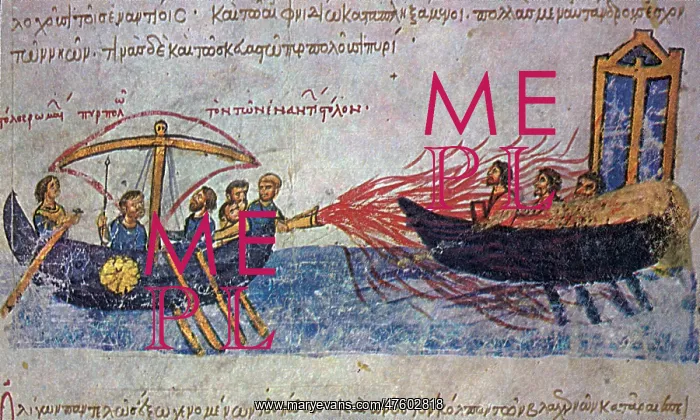
Byzantine sailors pour Greek fire from bow nozzle at enemy. Image appears in the 12th century Madrid Skylitzess an illuminated manuscript of the Synopsis of Histories by John Skylitzes, which covers the reigns of the Byzantine emperors from the death of Nicephorus I in 811 to the deposition of Michael IV in 1057. Greek fire was an incendiary weapon used by the Byzantine Empire. The Byzantines typically used it in naval battles to great effect as it could continue burning while floating on water. It is said to have been invented by a Syrian engineer, named Callinicus, in the seventh century (673 AD). The liquid fire was hurled on to the ships of their enemies from siphons and burst into flames on contact. Both Arab and Greek sources agree that it surpassed all incendiary weapons in destruction. The secret behind the Greek fire was handed down from one emperor to the next for centuries. Rumors about its composition include such chemicals as liquid petroleum, naphtha, burning pitch, sulphur, resin, quicklime and bitumen, along with some other secret ingredient'. The exact composition, however, remains unknown. Although the term Greek fire has been used since the Crusades, in the original Byzantine sources it is called by a variety of names, such as sea fire, Roman fire, war fire and liquid fire
Pick your License
Restrictions Only for Ireland and United Kingdom
Burst Byzantium Incendiary Ingredient Liquid Syrian Weaponry
Features In These Collections
> Contributors > PHR