

 : Calamities Associated with Comets


Calamities Associated with Comets

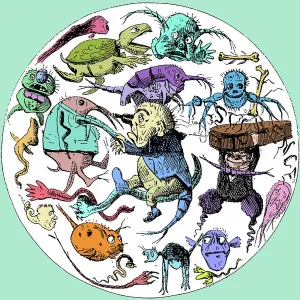
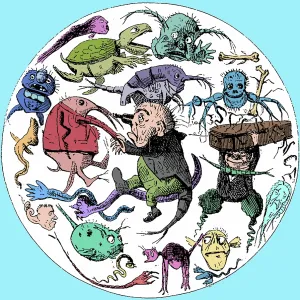
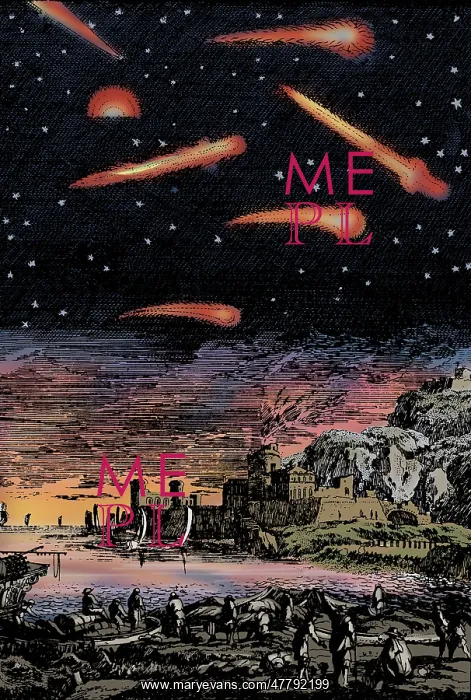
Engraving entitled: Calamities on Earth Associated with the Passage of Comets, from the 17th century. Before the invention of the telescope, comets seemed to appear out of nowhere in the sky and gradually vanish out of sight. They were usually considered bad omens of deaths of kings or noble men, or coming catastrophes, or even interpreted as attacks by heavenly beings against terrestrial inhabitants. A comet is a celestial object that orbits the Sun along an elongated path. A comet that is not near the Sun consists only of a nucleus, a solid core of frozen water, frozen gases, and dust. When a comet comes close to the Sun, its nucleus heats up and releases a gaseous coma that surrounds the nucleus. A comet forms a tail when solar heat or wind forces dust or gas off its coma, with the tail always streaming away from the Sun. Short-period comets have orbital periods of less than 200 years and come from the region known as the Kuiper belt. Long-period comets have periods greater than 200 years and come from the Oort cloud
Picture No
13346951
Media ID
47792199
Size
3300px x 4900px (7.2MB)
Credit
© Science Source / Mary Evans Picture Library
Usage Restrictions
Commercial sales may require 3rd party clearance
Source
Science Source

Pick your License

Please tell us the book title or ISBN

Please supply intended use


Restrictions Only for Ireland and United Kingdom

Celestial Comet Phemomena


Features In These Collections

> Contributors > PHR

Gallery Wall Inspiration

Ilya Ilyich Mechnikov, Russian Immunologist
Laughing Gas, Nitrous Oxide
James Watt, Scottish Inventor and Engineer
Asteriornis ancient bird, illustration
Hesperornis ancient bird, illustration
Icthyornis ancient bird, illustration
Confuciusornis sanctus ancient bird, illustration
Deinonychus ancient bird art, illustration
Laughing Gas, Nitrous Oxide
Thames Water Drop, 1850
Michael Faraday and Father Thames, 1855
Thames Water Drop, 1850
Michael Faraday and Father Thames, 1855
Cellular Plant Tissue, Matthias Jakob Schleiden, 1847
Henry Maudsley, British Psychiatrist
Swimming Manual, Digby, 1587
Russian Pirates, 1805
Ilya Ilyich Mechnikov, Russian Immunologist
Johnny Appleseed, American Nurseryman
Saint Paul, Christian Apostle
James Fenimore Cooper, American Author
Arthrobotrys, SEM
Rhizopus sexualis, SEM
Flint Hatchet, Stone Age Tool


© Copyright Mary Evans Picture Library - All Rights Reserved 2026
Powered by Media Storehouse®
We accept all major payment options so you can pay for the things you need in the way that is most convenient for you
Facebook     Twitter     Instagram