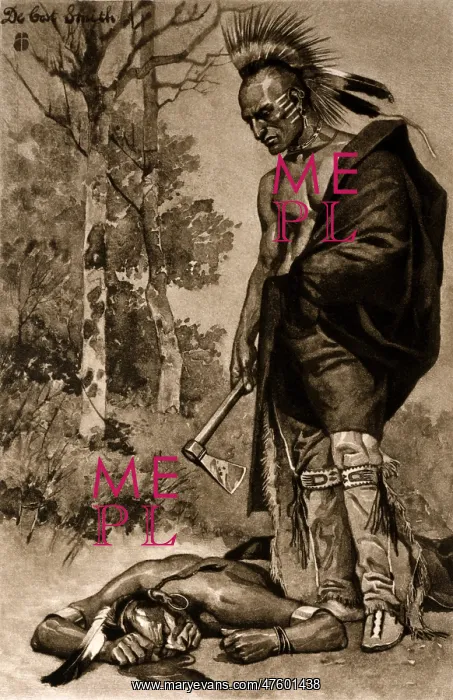
The Death of Pontiac, 1769
Illustration depicting the death of Pontiac (1720-1769), an Ottawa leader who became famous for his role in Pontiac's Rebellion (1763-1766). After the French and Indian War, Native American allies of the defeated French found themselves increasingly dissatisfied with the trading practices of the British. Widespread attacks against British forts and Anglo-American settlements in the Ohio Country soon followed. The degree to which Pontiac personally influenced events beyond the Detroit region has been variously interpreted. Although the British had successfully pacified the uprising in the Ohio Country, British military dominance was tenuous, and they decided to negotiate with the Ottawa leader. Pontiac, empowered by the attention paid him by the British, asserted more power among the Indians of the region than he actually possessed. Local rivalries flared up. Pontiac was murdered on April 20, 1769, at the French village of Cahokia by a Peoria Indian, perhaps in retaliation for an earlier attack by Pontiac
Pick your License
Restrictions Only for Ireland and United Kingdom
1700s Ambition Anglo Anglo American Anglo-american Attacks Daring Determination Dissatisfied Empowered Forts Legacy Murdered Negotiate Ohio Ottawa Peoria Policies Pontiac Pontiacs Practices Prominent Settlements Taxing Tomahawk Trading
Features In These Collections
> Contributors > PHR