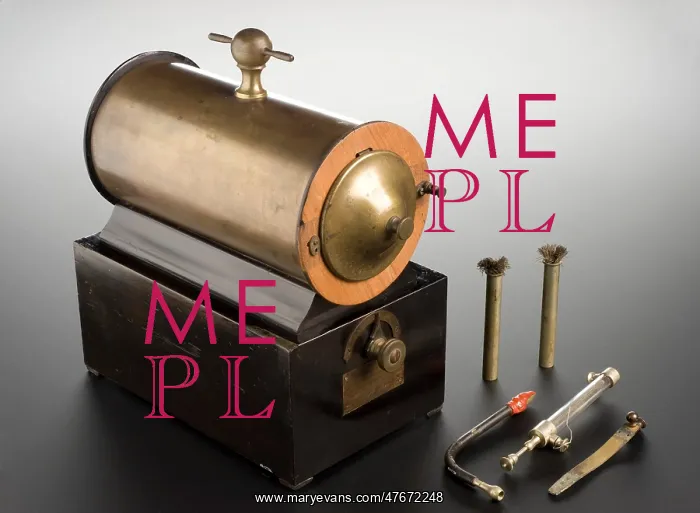
Duchenne Medical Induction Machine, 1849
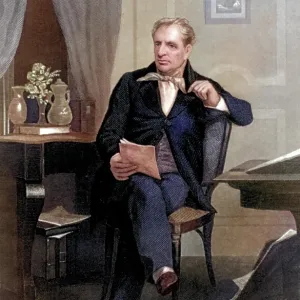
Duchenne Medical Induction Machine, made by Charriere, Paris, French, 1849. Guillaume-Benjamin-Amand Duchenne de Boulogne (September 17, 1806 - September 15, 1875) was a French neurologist who advanced the science of electrophysiology. Influenced by the beliefs of physiognomy, Duchenne wanted to determine how the muscles in the human face produce facial expressions which he believed to be directly linked to the soul of man. He triggered muscular contractions with electrical probes, recording the resulting distorted and often grotesque expressions with the recently invented camera. He published his findings in 1862, together with extraordinary photographs of the induced expressions, in the book The Mechanism of Human Physiognomy (Mecanisme de la physionomie Humaine). The work was an important resource used by Charles Darwin for his own study on the genetics of behavior, but in recent years it has been reclaimed as an important landmark in the history of the photographic arts
Pick your License
Restrictions Only for Ireland and United Kingdom
Amand Boulogne Contractions Duchenne Experiments Expressions Guillaume Induced Induction Mechanism Muscular Physiognomical Physiognomy Physiology Probes
Features In These Collections
> Contributors > PHR