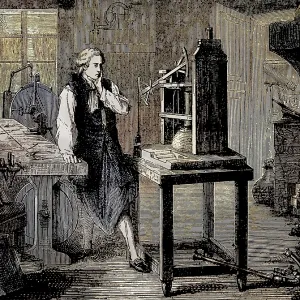
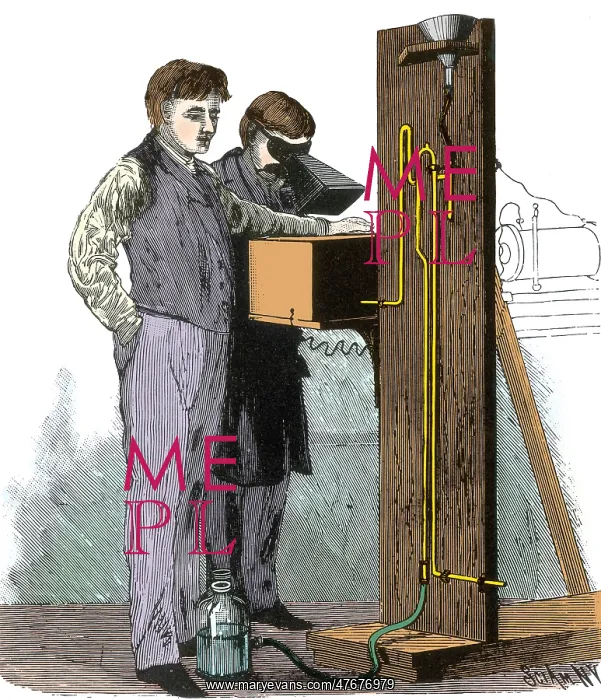
Edison's X-Ray Apparatus, 1896
In 1895, Thomas Edison investigated materials ability to fluoresce when exposed to X-rays, and found that calcium tungstate was the most effective substance. Around March 1896, the fluoroscope he developed became the standard for medical X-ray examinations. He dropped X-ray research around 1903, even before the death of Clarence Madison Dally, one of his glassblowers. Dally had a habit of testing X-ray tubes on his hands, and acquired a cancer in them so tenacious that both arms were amputated in a futile attempt to save his life. In 1901, U.S. President William McKinley was shot twice in an assassination attempt. While one bullet only grazed his sternum, another had lodged somewhere deep inside his abdomen and could not be found. A McKinley aide sent word to inventor Edison to rush an X-ray machine to Buffalo to find the stray bullet. It arrived but wasn't used. While the shooting itself had not been lethal, gangrene had developed along the path of the bullet, and McKinley died of septic shock due to bacterial infection six days later
Pick your License
Restrictions Only for Ireland and United Kingdom
Alva Colorised Colorization Diagnostic Edison Enhancement Imaging Menlo Non-invasive Procedure Radiogram Radiography Radiology Technological Tomogram Tomography Wizard X-ray Xray
Features In These Collections
> Contributors > PHR