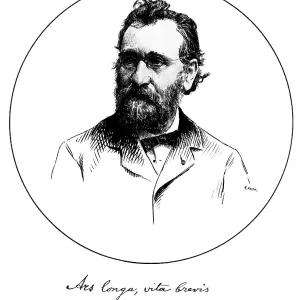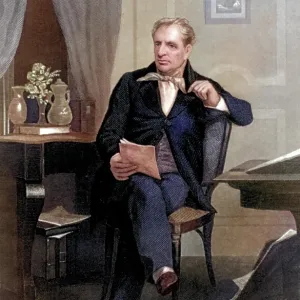

Erastus Brigham Bigelow, American Inventor
Erastus Brigham Bigelow (April 2, 1814 - December 6, 1879) was an American inventor of weaving machines. He showed an inventive genius at the early age of 14, when he invented a machine to manufacture piping cord. He then devised a hand loom for suspender webbing. His work on Stenography (1832), a short manual on shorthand writing, was written and published about this time. In 1838, he invented a power loom for weaving knotted counterpanes, and later a power loom to weave coach lace. In 1839 he was contracted to produce a power loom capable of weaving two-ply ingrain carpets. With his first loom he succeeded in obtaining ten or twelve yards daily, which he increased by improvements until a product of twenty-five yards was regularly obtained. Afterward he invented a power loom for weaving Brussels (pictorial tapestry) and velvet tapestry carpets, his most important invention, which attracted much attention at the World's Fair in London in 1851. He was elected a Fellow of the American Academy of Arts and Sciences in 1866. He died in 1879 at the age of 65
Pick your License
Restrictions Only for Ireland and United Kingdom
Bigelow Brigham Carpets Enhancement Erastus Loom Weaving
Features In These Collections
> Contributors > PHR