Federal Camp Contraband, 19th Century
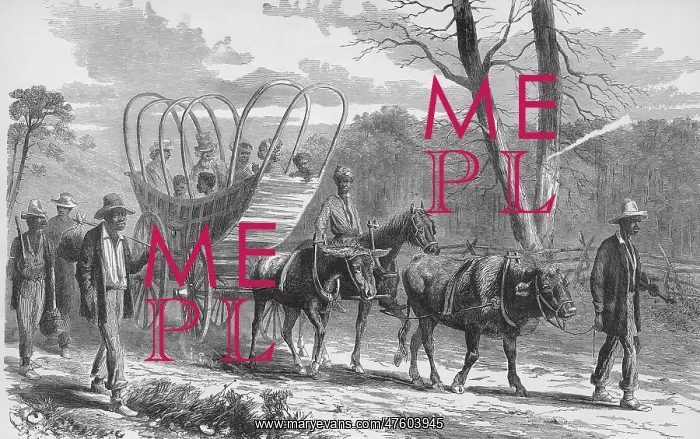
Contrabands Coming Into Federal Camp, 19th Century. Illustration captioned: The war in Virginia - contrabands coming into the Federal camp. The Negro furnishes, in his various phases of existence, wonderful studies for the artist and philosopher. Never, perhaps, has a race seen such a moment as during the Civil War, when the chains of bondage were breaking from the limbs of 4, 000, 000 of men. The distant roar of battle was to them a sound of deliverance. With all the uncouth, odd and queer manifestations of joy they prepared to reach the camp of the delivering Yanks. Yoking together most incongruous teams before the farm wagons of their fled masters, with ass and ox and horse, with household gear queerly assorted, with useless truck and little that could rarely serve them, they started for the Promised Land, and might often have been seen coming in as our artist, a most close student of nature, depicted them, with his usual felicity of portraiture. Frank Leslie, 1896. Contraband was a term commonly used in the United States military during the American Civil War to describe a new status for certain escaped slaves or those who affiliated with Union forces. The Army (and the United States Congress) determined that the US would not return escaped slaves who went to Union lines and classified them as contraband. They used many as laborers to support Union efforts and soon began to pay them wages. The former slaves set up camps near Union forces, and the Army helped support and educate both adults and children among the refugees. Thousands of men from these camps enlisted in the United States Colored Troops when recruitment started in 1863. At war's end, more than 100 contraband camps existed in the South
Pick your License
Restrictions Only for Ireland and United Kingdom
Affiliates African American Contrabands Emancipated Escaped Ex Slave Ex-slave Runaway Secession
Features In These Collections
> Contributors > PHR