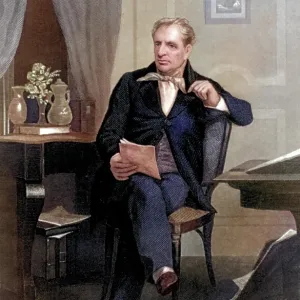

Francis Crick, English Molecular Biologist
The name of Nobel laureate Francis Crick (1916-2004) is inextricably tied to the discovery of the double helix of deoxyribonucleic acid (DNA) in 1953, considered the most significant advance in the understanding of biology since Darwin's theory of evolution. Yet, during a research career spanning more than fifty years, theoretical biologist Crick also made fundamental contributions to structural studies of other important biological molecules through X-ray analysis; to the understanding of protein synthesis; to the deciphering of the genetic code by which hereditary information is stored and transcribed in the cell; and to our conception of consciousness. Through force of personality and intellect, readily apparent in this online selection from his papers, the Briton served as a one-man clearinghouse of criticism, ideas, and information for scientists the world over. The discovery in 1953 of the double helix, the twisted-ladder structure of deoxyribonucleic acid (DNA), by James Watson and Francis Crick marked a milestone in the history of science and gave rise to modern molecular biology, which is largely concerned with understanding how genes control the chemical processes within cells. In short order, their discovery yielded ground-breaking insights into the genetic code and protein synthesis. During the 1970s and 1980s, it helped to produce new and powerful scientific techniques, specifically recombinant DNA research, genetic engineering, rapid gene sequencing, and monoclonal antibodies, techniques on which today's multi-billion dollar biotechnology industry is founded. Major current advances in science, namely genetic fingerprinting and modern forensics, the mapping of the human genome, and the promise, yet unfulfilled, of gene therapy, all have their origins in Watson and Crick's inspired work. The double helix has not only reshaped biology, it has become a cultural icon, represented in sculpture, visual art, jewelry, and toys
Pick your License
Restrictions Only for Ireland and United Kingdom
Acid Biologist Biology Crick Deoxyribonucleic Discover Discoverer Genetics Helix Laureate Molecular Protein Synthesis Theoretical
Features In These Collections
> Contributors > PHR