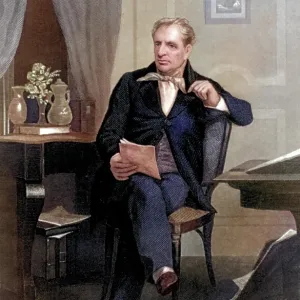
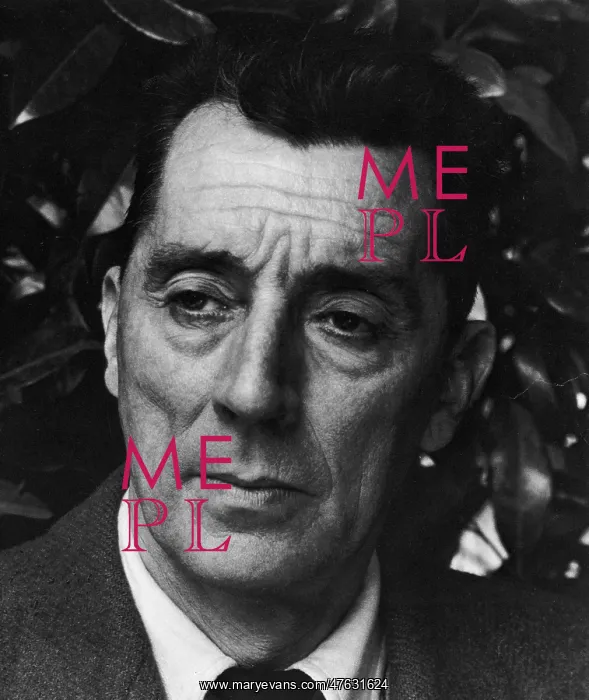
Frederic Joliot-Curie, French Physicist
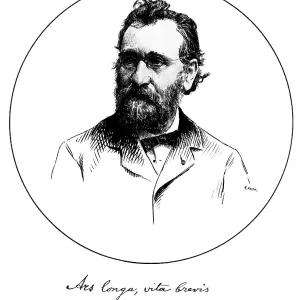
Undated photography of Joliot-Curie by Paul Strand. Jean Frederic Joliot-Curie (March 19, 1900 - August 14, 1958), born Jean Frederic Joliot, was a French physicist. In 1925 he became an assistant to Marie Curie, at the Radium Institute. He fell in love with her daughter Irene Curie, and soon after their marriage in 1926 they changed their surnames to Joliot-Curie. At the insistence of Marie, Joliot-Curie obtained a second bachelor's degree, and a doctorate in science, doing his thesis on the electrochemistry of radio-elements. From 1928 they combined their research interests on the study of atomic nuclei. In 1934 they created radioactive nitrogen from boron and then radioactive isotopes of phosphorus from aluminum and silicon from magnesium. They were awarded the Nobel Prize for chemistry in 1935 for their discovery of artificial radioactivity. In 1937 he left the Radium Institute to become a professor at the College de France working on chain reactions and the requirements for the successful construction of a nuclear reactor that uses controlled nuclear fission to generate energy through the use of uranium and heavy water. In 1945, he became France's first High Commissioner for Atomic Energy. In 1948 he oversaw the construction of the first French atomic reactor. A devout communist, he was relieved of his duties in 1950 for political reasons. Both he and Ir?ne died of conditions caused by their long exposure to radioactivity. Irene died in 1956 at the age of 58. He died in 1958 at the age of 58
Pick your License
Restrictions Only for Ireland and United Kingdom
Artificial Atomic Curie Fission Frederic Joliot Joliot Curie Joliot-curie Laureate Nitrogen Nobelist Nuclei Radioactive Radioactivity Recipient Strand
Features In These Collections
> Contributors > PHR