

 : Gaius Marius, Roman General and Statesman


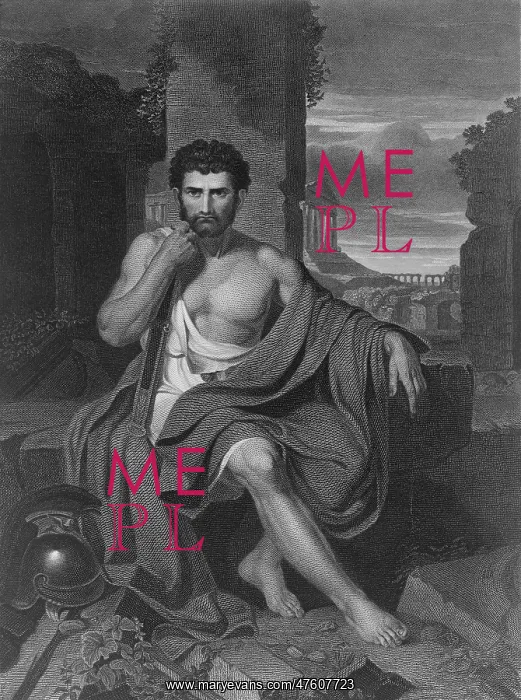
Gaius Marius, Roman General and Statesman

In 88 BC war broke out with Mithradates, and Sulla was appointed by the senate to the chief command. Marius then had the command transferred to himself. Sulla marched upon Rome and defeated Marius, who fled. Sulla proclaimed that Marius, when captured, be put to death. Marius made his way to Carthage, but was forbidden to land, so he told the messenger to inform the governor that he had seen Marius sitting as a fugitive among the ruins of Carthage. Gaius Marius (157-86 BC) was a Roman general and statesman. He was elected consul seven times during his career. He is remembered for his dramatic reforms of Roman armies, authorizing recruitment of landless citizens, eliminating the manipular military formations, and reorganizing the structure of the legions into separate cohorts. Marius defeated the invading Germanic tribes (the Teutones, Ambrones, and the Cimbri), for which he was called the third founder of Rome. He played a critical role in the destruction of the Roman Republic, and the birth of the Roman Empire. Marius died just seventeen days into his seventh consulship
Picture No
10801561
Media ID
47607723
Size
3180px x 4273px (4.8MB)
Credit
©Photo Researchers / Mary Evans Picture Library
Source
Photo Researchers

Pick your License

Please tell us the book title or ISBN

Please supply intended use


Restrictions Only for Ireland and United Kingdom

Carthage Consul Exile Gaius Marius Reformer Savior


Features In These Collections

> Contributors > PHR

Gallery Wall Inspiration

Ilya Ilyich Mechnikov, Russian Immunologist
Laughing Gas, Nitrous Oxide
James Watt, Scottish Inventor and Engineer
Asteriornis ancient bird, illustration
Hesperornis ancient bird, illustration
Icthyornis ancient bird, illustration
Confuciusornis sanctus ancient bird, illustration
Deinonychus ancient bird art, illustration
Laughing Gas, Nitrous Oxide
Thames Water Drop, 1850
Michael Faraday and Father Thames, 1855
Thames Water Drop, 1850
Michael Faraday and Father Thames, 1855
Cellular Plant Tissue, Matthias Jakob Schleiden, 1847
Henry Maudsley, British Psychiatrist
Swimming Manual, Digby, 1587
Russian Pirates, 1805
Ilya Ilyich Mechnikov, Russian Immunologist
Johnny Appleseed, American Nurseryman
Saint Paul, Christian Apostle
James Fenimore Cooper, American Author
Arthrobotrys, SEM
Rhizopus sexualis, SEM
Flint Hatchet, Stone Age Tool


© Copyright Mary Evans Picture Library - All Rights Reserved 2026
Powered by Media Storehouse®
We accept all major payment options so you can pay for the things you need in the way that is most convenient for you
Facebook     Twitter     Instagram