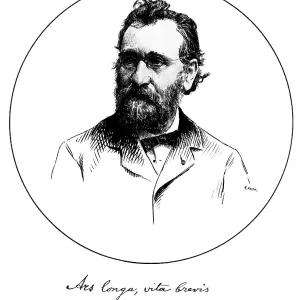

Galileo Galilei, Italian Astronomer
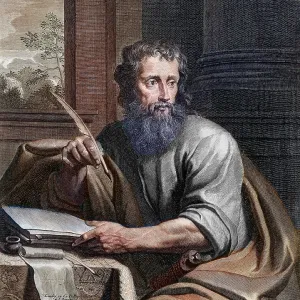
Galileo Galilei (February 15, 1564 - January 8, 1642) was an Italian physicist, mathematician, astronomer, and philosopher who played a major role in the Scientific Revolution. His achievements include improvements to the telescope, important astronomical observations and support for Copernicanism. He has been called the father of modern observational astronomy, the father of modern physics, the father of science, and the father of modern science'. In 1610 he became the first person to use a telescope to make astronomical observations. He discovered the mountains on the Moon, the four largest moons of Jupiter and numerous dim stars. He studied the motion of a pendulum and found that the swings have a constant time period. He studied gravity, showing that heavy and light objects fall at the same rate. He supported the Copernican theory that the Sun was at the center of the solar system rather than the Earth. This belief was judged heretical by the Inquisition in 1633 and he was sentenced to house arrest for the rest of his life. Suffering fever and heart palpitations, he died in 1642, at the age of 77
Pick your License
Restrictions Only for Ireland and United Kingdom
1564-1642 Astronomer Galilei Galileo Math Polymath
Features In These Collections
> Contributors > PHR