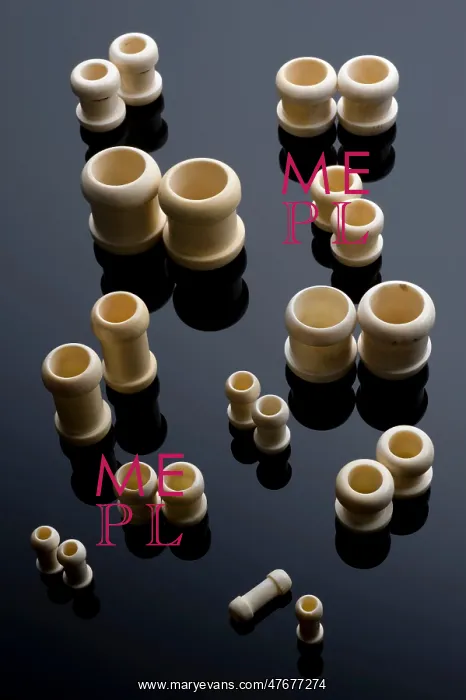
Gastro-Intestinal Bobbins, 19th Century
These bobbins would have been used to create a surgical anastomosis, a process by which two sections of hollow organs can be connected together. They were used most commonly during operations on the intestines. The bobbin would be secured by sutures and the gut allowed to heal without narrowing. These bobbins are made from bone with the calcium removed. When the gut had healed the bone was digested. The largest bobbin is 27 mm in diameter and 43 mm high. The smallest is just 4 mm in diameter and 25 mm in height. The bobbins were invented by Sir William Arthur May Robson (1853-1933). However, the bobbins soon fell out of favor once Joseph Benjamin Murphy (1857-1916) invented his anastomosis button in 1892. Supplied by Science Museum, London, courtesy of Wellcome Images
Pick your License
Restrictions Only for Ireland and United Kingdom
Bobbin Connective Gastrointestinal Intestines Medicinal Surgery Surgical
Features In These Collections
> Contributors > PHR