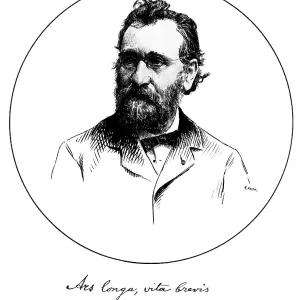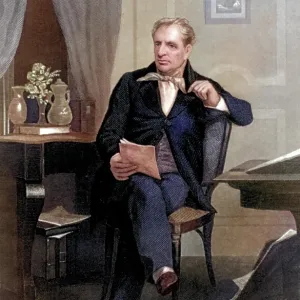
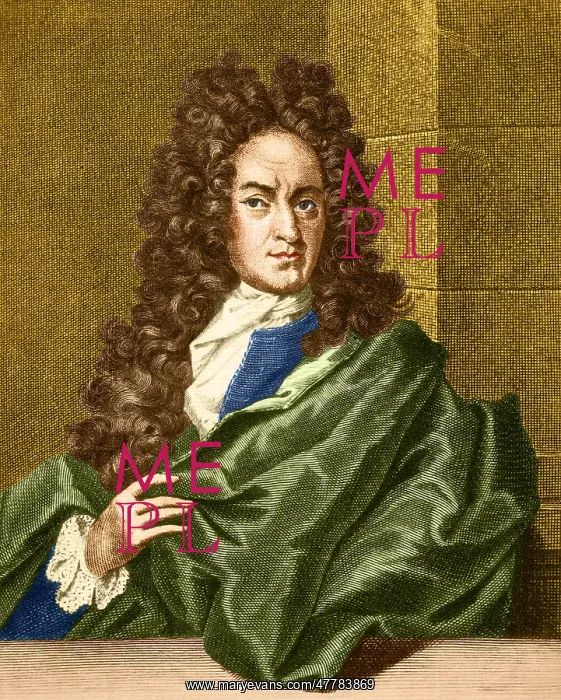
Georg Ernst Stahl, German Chemist
Georg Ernst Stahl (October 22, 1659 - May 24, 1734) was a German chemist, physician and philosopher. His focus was on the distinction between the living and nonliving. He believed that nonliving things are stable throughout time and did not rapidly change. On the other hand, living things are subject to change and have a tendency to decompose. Stahl professed an animistic system, in opposition to the materialism system. His main argument on living things was that there is an agent responsible for delaying this decomposition of living things and that agent is the anima or soul of the living organism. The anima controls all of the physical processes that happen in the body. He believed that the three important motions of the body are the circulation of blood, excretion and secretion. He thought that medicine should deal with the body as a whole and its anima, rather than the specific parts of a body. Just like medicine, he believed that chemistry could not be reduced to mechanistic views. Although he believed in atoms, he did not believe that atomic theories were enough to describe the chemical processes that go on. He believed that atoms could not be isolated individually and that they join together to form elements. He was a supporter of vitalism, and until the late 18th century his works on phlogiston were accepted as an explanation for chemical processes. He died in 1734 at the age of 74
Pick your License
Restrictions Only for Ireland and United Kingdom
1659 1734 Anima Animistic Chemistry Epromo06122019 Stahl Vitalism
Features In These Collections
> Contributors > PHR