Giovanni Borelli, Biomechanics, 1680
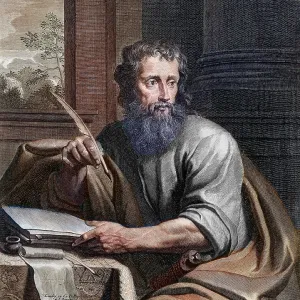
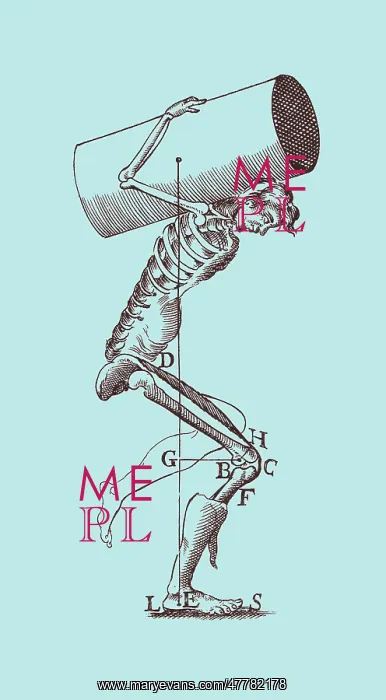
De Motu Animalium (On Animal Motion, 1680). Image shows how the human body centers and suspends a load by a system of levers under tension from muscles and tendons. Giovanni Alfonso Borelli (January 28, 1608 - December 31, 1679) was a Renaissance Italian physiologist, physicist, and mathematician. He contributed to the modern principle of scientific investigation by continuing Galileo's custom of testing hypotheses against observation. Trained in mathematics, Borelli also made extensive studies of Jupiter's moons, the mechanics of animal locomotion and, in microscopy, of the constituents of blood. He also used microscopy to investigate the stomatal movement of plants, and undertook studies in medicine and geology. During his career, he enjoyed the protection of Queen Christina of Sweden, which sheltered him from the attacks from the Italian authorities suffered by Galileo. BorelliaEURTMs major scientific achievements are focused around his investigation into biomechanics. For his is publications, De Motu Animalium I and De Motu Animalium II (published posthumously, Borelli is labeled as the father of modern biomechanics. He died in 1679 at the age of 71
Pick your License
Restrictions Only for Ireland and United Kingdom
Alfonso Animalium Articulation Biomechanics Borelli Diagram Leverage Load Motu Muscle Musculature Pivot Tendon Tension
Features In These Collections
> Contributors > PHR