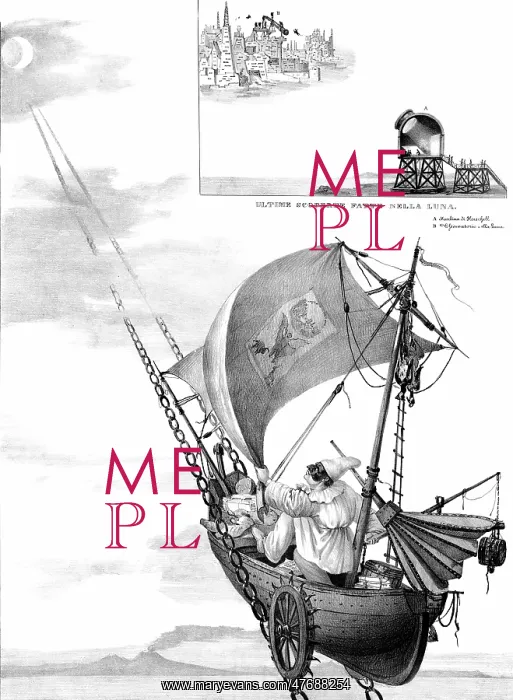
The Great Moon Hoax, Riding to the Moon
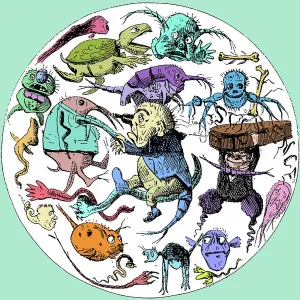
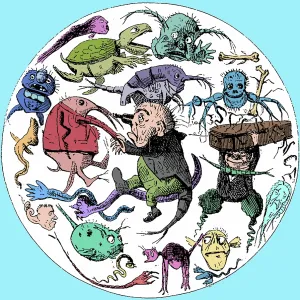
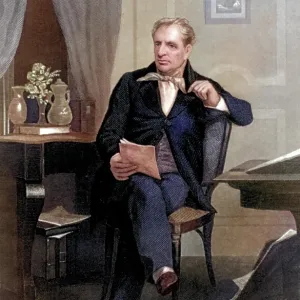
Entitled: Partenza di Pulcinella per la luna. Punch riding to the moon in a ship on a chain track; inset shows Herschel's machine and moon observatory. The Great Moon Hoax refers to a series of six articles that were published in The Sun, a New York newspaper, beginning on August 25, 1835, about the supposed discovery of life and even civilization on the Moon. The discoveries were falsely attributed to English astronomer John Herschel. The articles described fantastic animals on the Moon, including bison, goats, unicorns, bipedal tail-less beavers and bat-like winged humanoids (Vespertilio-homo) who built temples. There were trees, oceans and beaches. These discoveries were supposedly made with an immense telescope of an entirely new principle. Eventually, the authors announced that the observations had been terminated by the destruction of the telescope, by means of the Sun causing the lens to act as a burning glass, setting fire to the observatory. Authorship of the article has been attributed to Richard Adams Locke a reporter who was working for The Sun. Herschel was initially amused by the hoax, noting that his own real observations could never be as exciting. He later became annoyed when he had to answer questions from people who believed the hoax was serious. Lithograph by Salvatore Fergola, 1835 - 1849s