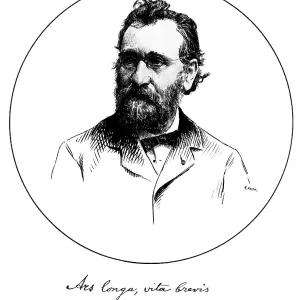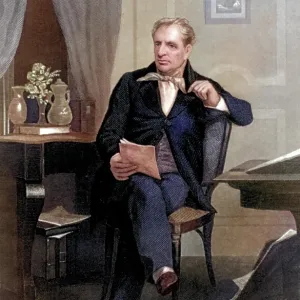
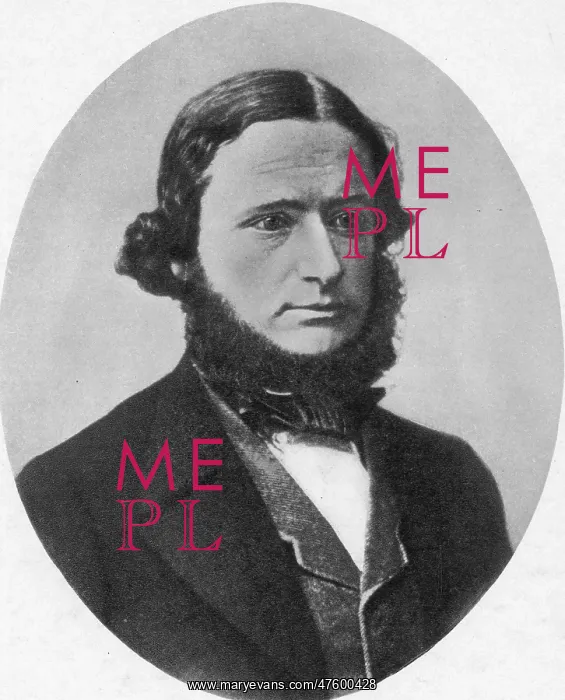
Gustav Kirchhoff, German Physicist
Gustav Robert Kirchhoff (1824-1887) was a German physicist who contributed to the fundamental understanding of electrical circuits, spectroscopy, and the emission of black-body radiation by heated objects. He coined the term black body radiation in 1862, and two sets of independent concepts in both circuit theory and thermal emission are named Kirchhoff's laws after him, as well as a law of thermochemistry. The Bunsen-Kirchhoff Award for spectroscopy is named after him and his colleague, Robert Bunsen. He contributed greatly to the field of spectroscopy by formalizing three laws that describe the spectral composition of light emitted by incandescent objects. He also contributed to optics, carefully solving Maxwell's equations to provide a solid foundation for Huygen's principle (and correcting it in the process). He died in 1887 at the age of 63
Pick your License
Restrictions Only for Ireland and United Kingdom
1824 Bunsen Busen Circuit Circuits Co Founder Co-founder Colleague Creator Emission Kirchhoff Laws Radiation Spectroscopy Theory Thermal
Features In These Collections
> Contributors > PHR