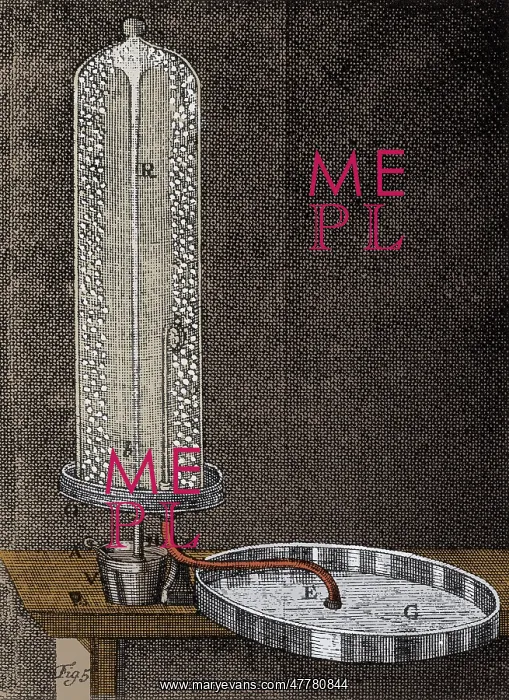
Hauksbee Mercury Experiment, 1705
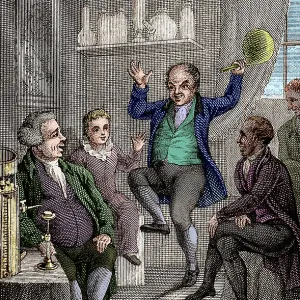
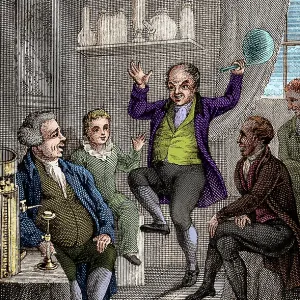
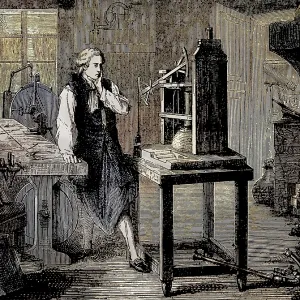
Francis Hauksbee the Elder (1660-1713) was an English scientist best known for his work on electricity and electrostatic repulsion. A lab assistant to Isaac Newton, Hauksbee was appointed curator at the Royal Society in 1703. In 1705, Hauksbee had discovered that if he placed a small amount of mercury in the glass of his modified version of Otto von Guericke's generator, evacuated the air from it to create a vacuum and rubbed the ball in order to build up a charge, a very bright glow was created if he placed his hand on the outside of the ball. This effect later became the basis of the gas-discharge lamp, which led to neon lighting and mercury vapor lamps. In 1706 he produced an influence machine to generate this effect. He was elected a Fellow of the Royal Society the same year. This image has been colorized