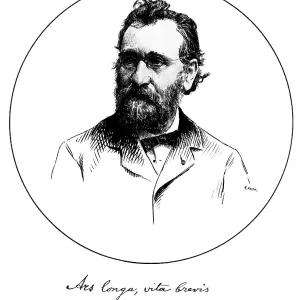

Henri Moissan, French Chemist and Inventor
Moissan trying to create synthetic diamonds using an electric arc furnace. Ferdinand Frederick Henri Moissan (September 28, 1852 - February 20, 1907) was a French chemist. He published his first scientific paper about the carbon dioxide and oxygen metabolism in plants, 1874. He left plant physiology and turned towards inorganic chemistry. During the 1880s Moissan was focused on fluorine chemistry and especially the production of fluorine itself. He eventually succeeded in preparing fluorine in 1886 by the electrolysis of a solution of potassium hydrogen difluoride (KHF2) in liquid hydrogen fluoride (HF). The mixture was needed because hydrogen fluoride is a non-conductor. The device was built with platinum/iridium electrodes in a platinum holder and the apparatus was cooled to -50 oC. The result was to completely isolate the hydrogen produced from the negative electrode from the fluorine produced at the positive one. For this achievement, he was awarded the Nobel Prize in 1906. He went on to study fluorine chemistry in great detail, contributed to the development of the electric arc furnace and attempted to use pressure to synthesize diamonds from the more common form of carbon. He died suddenly in 1907, shortly after his return from receiving the Nobel Prize in Stockholm. His death was attributed to an acute case of fluoriditis. It is clear that his experiments with fluorine contributed to his early death like others in his area of study